

Wholesale Melamine Cyanurate: Properties, Uses, and Cost-Effective Sourcing Tips
2026-07-26
Melamine cyanurate (MCA) has quietly become a go-to flame retardant for industries that demand both performance and cost efficiency. From nylon compounds to electronic components, its unique combination of thermal stability and low smoke emission makes it indispensable. But with rising demand, sourcing high-purity MCA at wholesale prices without compromising quality can be a challenge. That’s where understanding its properties and applications pays off—and why partnering with a reliable supplier like X.X.F.R can simplify procurement. In this post, we’ll explore what makes MCA effective, where it’s used, and smart strategies to secure bulk orders that align with your budget and technical needs.
What Makes Melamine Cyanurate a Top Choice for Fire Safety?
Melamine cyanurate stands out in fire safety due to its unique nitrogen-based flame retardant mechanism. When exposed to high heat, it decomposes endothermically, absorbing energy and cooling the substrate. Simultaneously, it releases inert nitrogen-rich gases that dilute oxygen and flammable volatiles in the flame zone. This dual action—thermal quenching and gas-phase dilution—creates a highly effective barrier against ignition and flame spread, without relying on traditional halogenated additives.
Unlike some phosphate-based systems that primarily act in the solid phase, melamine cyanurate excels in disrupting the combustion cycle at multiple stages. Its high nitrogen content (nearly 67% by weight) ensures a steady release of non-combustible gases over a wide temperature range, making it particularly effective in thin-walled applications where char formation alone is insufficient. Additionally, it works synergistically with other phosphorus-based compounds, enhancing overall performance while maintaining low smoke density and toxicity—a critical advantage in enclosed environments.
From a practical standpoint, its fine particle size and excellent dispersion in polymers translate into consistent performance across various manufacturing processes. It doesn't migrate or leach out over time, providing long-term reliability that meets stringent fire standards worldwide. This intrinsic stability, combined with its halogen-free and eco-friendly profile, positions melamine cyanurate as a smart, future-ready solution for industries seeking robust fire protection without compromising on material properties or environmental goals.
From Plastics to Textiles: Where MCA Makes a Difference
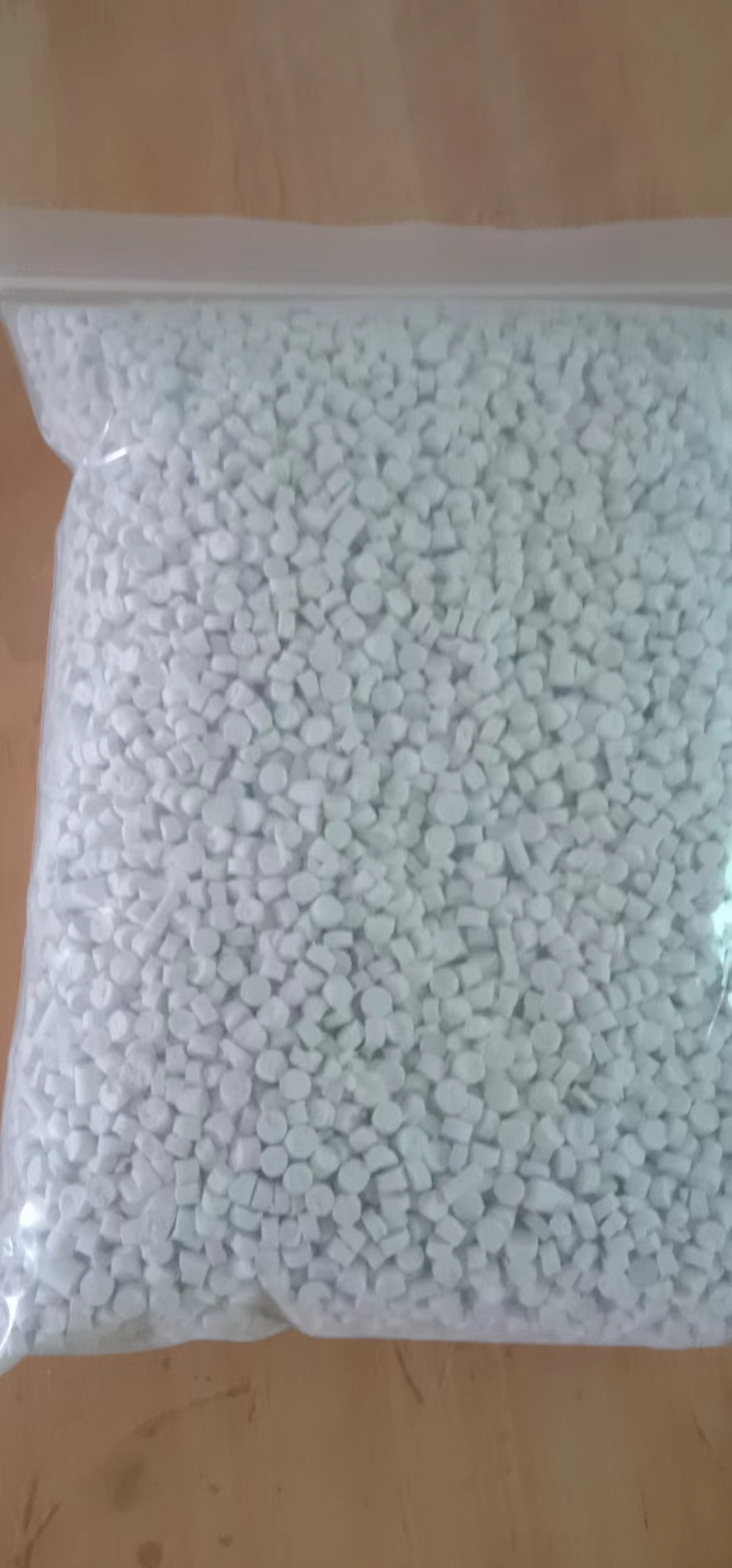
Melamine cyanurate, or MCA, quietly underpins countless products we encounter daily. In the world of plastics, it serves as a flame retardant that doesn’t just slow down fire—it actively disrupts the combustion cycle. When temperatures rise, MCA decomposes endothermically, cooling the material while releasing inert nitrogen-rich gases that dilute flammable vapors. This dual action keeps electronics, automotive parts, and household appliances safer without relying on halogenated compounds, which can produce corrosive smoke.
Its role in textiles might surprise you, but MCA is just as vital there. Fabrics destined for furniture, curtains, and protective clothing often incorporate this additive to meet rigorous fire safety standards. Unlike some treatments that wash out or degrade over time, MCA forms a persistent shield that blends seamlessly into synthetic fibers. It doesn’t compromise hand feel or color, allowing designers to retain aesthetic appeal while ensuring a garment or upholstery can resist ignition in critical moments.
Beyond its protective qualities, MCA helps manufacturers improve processing efficiency. The fine particle size and low solubility mean it disperses evenly in polymer melts, reducing clogs and wear on extrusion equipment. This inherent stability also contributes to the longevity of end products, making them tougher against thermal stress and UV exposure. From car dashboards to stage curtains, the difference MCA makes is felt in both safety margins and material integrity.
Understanding Its Thermal Stability and Smoke Suppression
Thermal stability refers to the material's ability to resist decomposition when exposed to elevated temperatures. In practical scenarios, this property dictates how well the substance maintains its structural integrity and functional performance during heating. A material with high thermal stability typically exhibits a higher onset degradation temperature and leaves behind a greater amount of char residue, which can shield the underlying layers from further heat. This behavior is commonly evaluated through thermogravimetric analysis, where the weight loss profile under controlled heating reveals critical thresholds such as the temperature at 5% or 50% mass loss.
Smoke suppression, on the other hand, involves reducing the quantity and toxicity of smoke released during combustion. This is crucial for enhancing visibility and lowering inhalation hazards in fire scenarios. Effective smoke suppressants operate by catalyzing the formation of a dense char layer, which traps combustible volatiles, or by promoting crosslinking reactions that limit the release of fuel fragments. Cone calorimetry tests often show a marked decrease in peak smoke production rate and total smoke release when these additives are at play. Together, thermal stability and smoke suppression create a dual barrier, slowing down flame spread while minimizing the environmental and health impacts of fire emissions.
Why Bulk Buyers Are Switching to This Cost-Effective Additive
Many purchasing managers initially rolled their eyes at yet another additive claiming to slash costs. But after running the numbers, they couldn’t ignore what was happening. This particular option was trimming raw material expenses by double-digit percentages without compromising performance. One manufacturer mentioned they’d been conditioned to believe that cheaper always meant weaker, yet here they were meeting the same quality benchmarks while freeing up capital for other parts of their operation.
The real shift came when a few forward-thinking companies started sharing internal data privately. They found that beyond the upfront savings, switching created a ripple effect—lower shipping weights, less waste during processing, and even reduced energy consumption in blending. It wasn’t just a line-item win; it was restructuring how they thought about production efficiency. Once those stories circulated at industry roundtables, the hesitation dissolved.
Long-term contracts are now being rewritten to lock in supply, and procurement teams that resisted are scrambling to catch up. The additive doesn’t require retooling or complex training, so the onboarding is nearly invisible. For bulk buyers dealing with razor-thin margins, that kind of seamless transition combined with sustained savings has turned this from an alternative into the obvious choice.
Spotting Superior Quality: Purity and Particle Size Matter
When assessing metal powders for advanced manufacturing, purity isn’t just a specification—it’s the foundation of reliable performance. Trace elements like oxygen, carbon, or nitrogen, even in minute amounts, can drastically alter mechanical properties, leading to porosity, reduced ductility, or unexpected phase changes during sintering or melting. Superior powders minimize these contaminants, ensuring consistent microstructures and predictable part behavior across every batch. For industries where failure isn’t an option, verifying purity through independent lab analysis isn’t a luxury; it’s a non-negotiable step.
Particle size, on the other hand, dictates how the powder behaves long before it becomes a finished component. A tightly controlled distribution—not just an average value—determines flowability, packing density, and the smoothness of each layer in additive manufacturing. Too many fines can cLog recoater blades and create uneven layers, while oversized particles sow the seeds for internal defects or surface roughness. The real art is in matching the size profile to the specific process: narrow cuts for laser-based systems, broader blends for binder jetting. It’s this attention to the granular details that separates high-yield production from constant troubleshooting.
Negotiating the Best Deals Without Sacrificing Consistency
Getting the price you want without giving away the store starts long before any formal conversation. It relies on a deeply established understanding of your own value levers—those elements that matter most to your operational rhythm, your brand promise, and your long-term trajectory. Too many negotiators enter talks ready to concede on terms like payment schedules, delivery windows, or service levels simply because the counterpart asks, not because those concessions are truly low-cost. The antidote is to map out your non-negotiables with precision: which conditions, if altered, would fracture your workflow or dilute your market proposition? Knowing this allows you to present flexibility as a curated offering rather than a reactive retreat. For example, you might offer a discount only if the client adopts a quarterly ordering pattern that smooths your production cycles. That way, you're trading a price cut for a consistency boost, not just surrendering margin for volume.
The actual conversation is where many people stumble, because they treat negotiation as a game of positions rather than a puzzle of interests. If you fixate only on the dollar amount, you'll often end up sacrificing invisible things—like a clause that guarantees steady supply, or the right to adjust timelines for seasonal peaks. Instead, steer the dialogue toward shared outcomes. Ask questions that reveal the other party's deeper drivers: Is their real concern cash flow, or is it certainty of delivery? Once you understand that, you can propose alternatives that protect your own consistency. For instance, you might agree to a lower per-unit cost if they commit to a longer contract, giving you predictable revenue without undercutting your operational cadence. Or you might offer faster turnaround on their priority items if they accept a slightly longer lead time for others, allowing you to batch processes efficiently. These creative moves keep your core standards intact while making the deal feel like a win for them.
What many fail to appreciate is that consistency in deal-making isn't just about the terms on paper—it's about the precedent you set. If you make one-off exceptions that erode your margins or stretch your team's capacity, you're training the market to expect those exceptions as the new norm. Over time, that fragments your reputation and makes every subsequent negotiation harder. Smart negotiators build in protections that quietly reinforce their standards. This might mean attaching automatic renewal clauses with predefined price adjustments, or linking special pricing to volume thresholds that are reviewed periodically. It could also involve structuring pilot programs that expire unless both parties agree to extend them, letting you test a new partnership without permanently altering your business model. By institutionalizing these safeguards, you shift the dynamic from "Can I get a better deal?" to "How do we structure something that works reliably for both of us?" That reframing keeps your operational consistency not just preserved but actively strengthened by each agreement you sign.
FAQ
Melamine cyanurate is a salt formed from melamine and cyanuric acid, often used as a flame retardant. Unlike regular melamine resin, it's not a plastic but a white crystalline powder with nitrogen-rich composition. The key difference is its specialized role: it works mainly through vapor-phase flame inhibition rather than char formation, making it ideal for polyamides and other specific polymers.
The electrical and electronics sector is a major user, since it's added to connectors, switches, and circuit breakers made of nylon. Automotive parts like engine covers and under-hood components also rely on it. Additionally, the construction industry incorporates it into insulation materials, and it's finding growing use in textile backcoatings for upholstery to meet fire safety standards.
When heated, melamine cyanurate decomposes endothermically, absorbing heat and cooling the material. It releases inert nitrogen gases that dilute flammable gases and oxygen near the flame front. In polyamides, it also promotes dripping, which physically removes heat and flammable material from the ignition source. This multi-step mechanism delays ignition and slows flame spread effectively.
Its sublimation point is around 440°C, far above typical nylon processing temperatures, so it remains stable during compounding. The powder has a fine particle size, often under 5 microns, allowing even dispersion without clumping. It's also non-melting and has low solubility in water and organic solvents, so it doesn't bleed or migrate from the polymer matrix over time.
Request a certificate of analysis with each batch, focusing on purity (usually 99% minimum), particle size distribution, and residual moisture content. Ask for a sample to test in your polymer system for dispersion quality and mechanical property retention. Reputable suppliers often provide third-party lab reports for heavy metals and other contaminants. Also, verify the packaging—moisture-proof bags or drums are essential to prevent caking during storage.
It's halogen-free, so it doesn't produce corrosive or highly toxic dioxins during a fire. It generates low smoke density, improving visibility and reducing soot damage. Unlike many halogenated systems, it often allows the polymer to retain more of its tensile strength and impact resistance. Plus, it can be easier to color-match light or bright shades since it's naturally white.
Negotiating long-term contracts with a few pre-qualified suppliers can lock in better pricing and guarantee supply. Buying in full container loads rather than pallets significantly cuts freight per kilo. Some distributors offer custom blends where melamine cyanurate is combined with synergists, which can lower your overall additive loading and simplify processing. Also, optimizing your formulation to use the minimum effective dose—often around 6-8% in unfilled nylon 66—avoids unnecessary overuse.
Conclusion
Melamine cyanurate has carved out a solid reputation as a versatile flame retardant, prized for its ability to enhance fire safety without heavy trade-offs in material performance. At the core of its effectiveness is a nitrogen-rich structure that cools combustion and dilutes flammable gases, while its endothermic decomposition absorbs heat. This makes it a top pick for polyamide resins, where it delivers V-0 ratings in thin sections with minimal impact on mechanical integrity. What sets MCA apart is its combined thermal stability and smoke suppression: it stays intact during processing up to 300°C, then actively reduces smoke density and toxicity when flames do break through. Such behavior has pushed it beyond traditional plastics into textiles, coatings, and elastomers, where lightweight, halogen-free protection is critical.
For bulk buyers, MCA’s appeal goes beyond performance to genuine cost advantages. Its relatively low dosage needs and compatibility with a range of polymers keep formulation costs down, while long-term supply agreements are becoming common as manufacturers recognize consistent savings over halogenated alternatives. Spotting superior quality, however, means digging into details—purity above 99.5% and a controlled particle size distribution (often 2–5 µm) directly affect dispersion and flame-retardant efficiency. Smart procurement hinges on ongoing dialogue with suppliers: requesting batch-level certificates of analysis, negotiating pricing on a delivered basis, and locking in specs that balance price with reliable, repeatable quality. This approach ensures MCA remains both a performance upgrade and a strategic cost move.
Contact Us
Contact Person: Guohua Wang
Email: [email protected]
Tel/WhatsApp: 8613003442895
Website: https://www.xxflameretard.com