

Professional Pressure Vessels: Key Considerations for Industrial Applications
2026-06-04
In industries where safety and efficiency are non-negotiable, pressure vessels stand at the core of critical processes—from chemical reactors to energy storage. Yet, their performance hinges on far more than robust materials or precise engineering; it's the manufacturer's expertise that truly safeguards operations. When you delve into the world of professional pressure vessels, a name like DYE emerges as a benchmark for reliability, weaving decades of field-tested innovation into every design. But what exactly sets a top-tier vessel apart, and how can your application avoid costly oversights? This guide unpacks the essential factors you need to weigh before making a choice that could define your facility's uptime and compliance.
Selecting Materials That Withstand Harsh Environments
Choosing the right material for a harsh environment isn’t just about picking the strongest option off a shelf. It’s a balancing act between chemistry, physics, and a deep understanding of what the material will actually face day after day. A part that lives in a quiet indoor setting might only need to resist a bit of dust, but throw in salt spray, wild temperature swings, or abrasive particles, and suddenly the entire selection process shifts. Engineers often start by mapping out every stressor—chemical exposure, UV radiation, cyclic loading, you name it—before even glancing at a datasheet.
Corrosion often tops the list of concerns, especially in marine or chemical processing settings. Stainless steels and nickel alloys get a lot of attention, but sometimes a polymer like PTFE or a ceramic coating makes more sense when metals simply can’t hold up. Thermal demands add another layer: a material that stays tough at -40°C might turn brittle in a cryogenic application, while others lose all strength before hitting 300°C. Mechanical wear tends to sneak up, too—fine grit or constant vibration can chew through a surface that otherwise looks bulletproof on paper.
Real-world testing usually tells a different story than lab predictions. Salt fog chambers and thermal cycling rigs help, but nothing replicates years of mixed insults like actual field data. That’s why smart teams lean heavily on past failures—digging into why a pump impeller pitted after six months or why a seal swelled in a solvent it was supposedly rated for. Sometimes the best material turns out to be an unexpected hybrid or a surface treatment that reshapes the part’s vulnerabilities without a full redesign.
Engineering Designs for High-Pressure Scenarios
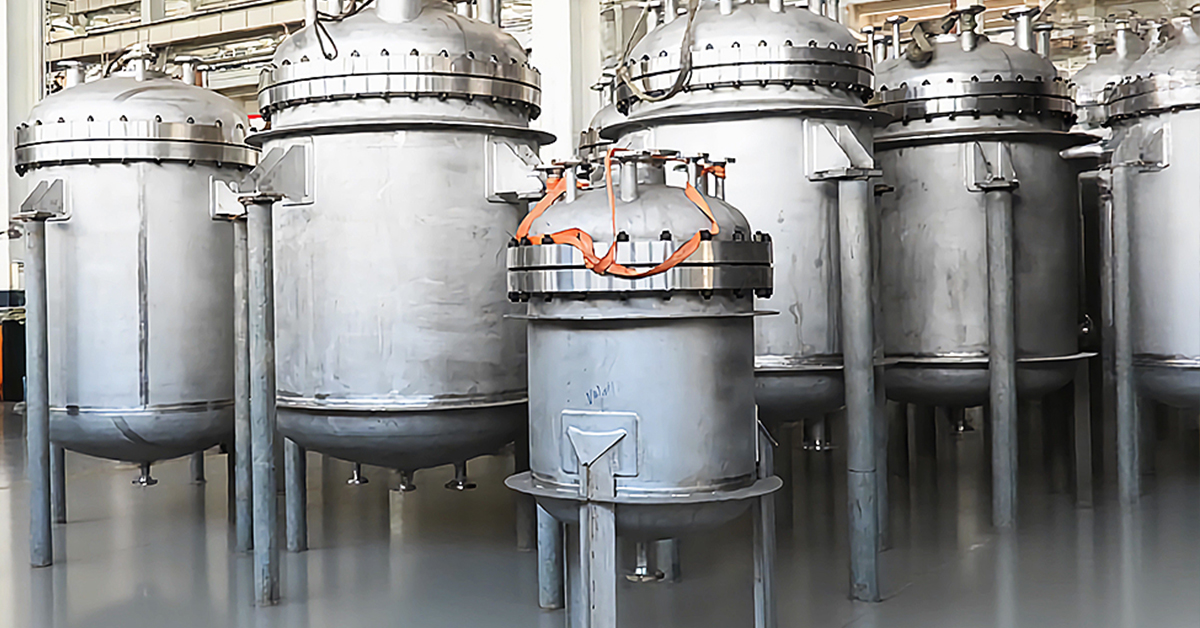
Designing systems for extreme pressures demands a mindset shift from conventional engineering. Every component, from valve seats to flange gaskets, must be scrutinized for stress concentration and material creep. We often turn to autofrettage techniques to induce compressive residual stresses in thick-walled vessels, extending fatigue life beyond what standard codified calculations would suggest. The goal is not just containment, but predictable, graceful degradation under sustained load.
Fluid behavior at elevated pressures introduces non-ideal compressibility and thermal effects that can derail a project. For instance, at hundreds of megapascals, common hydraulic oils can undergo significant viscosity shifts, altering response times in servo circuits. We’ve had to re-calibrate pressure-compensated pumps and incorporate real-time fluid property models into control logic. Such adjustments prevent cavitation damage and maintain sub-millisecond precision in actuation sequences.
Sealing becomes an art form above 100 MPa. Static O-rings often fail unless backup rings with a precisely calculated clearance gap are added, accounting for extrusion and thermal expansion. For dynamic seals, we abandon elastomers in favor of metallic C-rings or pressure-energized PTFE lip seals with custom geometries. Each joint is modeled with nonlinear FEA to verify that contact stress stays within the material’s envelope, even during transient peak pressures that can spike 20% above nominal levels.
Ensuring Compliance with Industry Safety Codes
Navigating the maze of safety regulations can feel like a full-time job, but it’s non-negotiable for any responsible operation. We start by thoroughly mapping out every code that applies to your specific sector—whether it’s OSHA, NFPA, or local mandates—and we keep a living document that evolves as quickly as the rules do. This isn’t just about putting a check in a box; it’s about weaving those standards into the fabric of daily workflows so that compliance becomes automatic rather than an afterthought.
Real compliance goes beyond paperwork. Our team conducts regular walk-throughs and spot checks that simulate real-world audit conditions, identifying potential pitfalls before they become fines or, worse, safety incidents. We’ve seen too many organizations rely on outdated binders and assumptions—our approach couples rigorous documentation with hands-on verification, giving you the confidence that if an inspector arrives unannounced, you’re not scrambling to find records or correct overlooked hazards.
We also believe in building a culture where every team member is a compliance partner. Through ongoing training sessions that ditch the dull lecture format in favor of interactive scenarios, employees learn to spot risks and understand the “why” behind each rule. When people at every level take ownership, the result is a workplace where safety codes aren’t seen as hurdles but as the foundation of a smarter, more resilient organization.
Routine Inspection Routines to Prevent Failures
It’s easy to think of inspections as just another box to tick, but the reality is that a well-designed routine can catch the small warning signs before they snowball into costly downtime. Instead of a one-size-fits-all checklist, tailor your walkthroughs to the actual rhythm of each piece of equipment—frequency, historical weak points, and the environment it operates in play a huge role in what you should be looking for.
Train your team to treat every inspection like a conversation with the machine. Unusual vibrations, subtle temperature shifts, or even a faint new odor are all cues worth investigating. When operators feel ownership over the process, they shift from passive observers to active problem spotters, often flagging anomalies that a static sensor network might overlook.
Don’t let inspection data gather dust in a logbook. Use findings to refine maintenance schedules and update training on the fly. Over time, a few thoughtful adjustments to your routine—moving from calendar-based to condition-based checks, for instance—can dramatically extend asset life and keep surprises off the production floor.
Tailoring Vessels to Specific Industrial Demands
Industrial operations rarely fit neatly into off-the-shelf solutions. A chemical plant handling corrosive acids at varying pressures demands vessel geometries and lining materials that generic catalogs simply don't list. We start every project by mapping the actual fluid dynamics, thermal cycling, and maintenance access patterns your process requires—then engineer the vessel from the inside out.
Material selection goes far beyond picking a stainless steel grade. For a recent pharmaceutical client, we specified a duplex alloy with electropolished internals to prevent biofilm formation, paired with a jacket that zoned heating across three separate circuits. The result slashed batch changeover times by over 30% because CIP cycles no longer fought against residual product clinging to surface imperfections.
Even footprint constraints become design drivers rather than compromises. When a food processor needed to boost throughput in a building with low headroom, we flattened the vessel profile and integrated an offset agitator mount. That one alteration eliminated the need for a costly structural remodel and kept the project within a six-month window—proof that truly tailored engineering pays for itself before the first production run finishes.
Optimizing Costs through Smart Manufacturing
Manufacturers have long chased cost savings through incremental tweaks, but smart manufacturing shifts the focus from trimming fat to building lean, responsive systems. By weaving sensors and data analytics into production lines, companies can now spot inefficiencies as they happen—whether it's a machine drawing excess power or a batch running slightly off spec. This real-time visibility turns cost control from a periodic audit into an ongoing, automated process, eliminating waste without relying on guesswork or rigid schedules.
Predictive maintenance exemplifies this shift. Instead of swapping parts on a fixed timeline or waiting for breakdowns, smart systems learn the subtle signs of wear—vibration patterns, temperature drifts—and flag issues early. The result is fewer unplanned stoppages, longer asset life, and maintenance crews deployed only when needed. It’s a quiet revolution that keeps budgets predictable and production floors humming, without the hidden expense of emergency repairs or rushed shipping for replacement components.
Beyond the machinery, smart manufacturing also reshapes workforce efficiency. Operators armed with intuitive dashboards can oversee multiple processes simultaneously, pivoting quickly when data reveals bottlenecks. And because the system connects everything from raw material inventory to final quality checks, overordering and scrap rates drop naturally. The real win is a culture where cost awareness is embedded in every action—not a top-down mandate, but a shared, data-driven instinct.
FAQ
Pressure vessels rely heavily on codes like ASME Section VIII or EN 13445. They set the floor for design, materials, fabrication, and testing—not just a regulatory box to tick, but an engineering backbone that prevents catastrophic failures.
Material choice dictates how well a vessel holds up against corrosion. In harsh chemicals, stainless steels or duplex alloys are common, sometimes with nickel-based liners. Overlooking compatibility risks thinning, leaks, and unplanned shutdowns.
Phased array ultrasonic testing and radiography catch internal weld flaws best. For surface cracks, dye penetrant or magnetic particle methods work. In vessels with cyclic loading, acoustic emission monitoring can spot crack initiation before it grows into a serious issue.
Pressure swings induce fatigue, with cracks starting well below yield limits. ASME screening methods estimate safe cycle counts, but detailed finite element analysis paired with S-N data gives a clearer picture. Skipping this step can turn a solid design into a time bomb.
Layered construction shines in ultra-high-pressure or hydrogen service, thanks to superior fracture toughness and leak-before-burst behavior. It also eases fabrication with thin high-strength sheets. The trade-off is higher cost and complexity, so it’s not a universal solution.
Differential expansion between vessel sections generates thermal loads that can trump pressure stress. Features like skirt supports, expansion joints, or flexible geometries relieve this. Above 400°C, creep becomes a factor, requiring time-dependent deformation analysis to avoid premature failure.
NDE is there from the start, verifying weld quality, and stays through periodic checks for corrosion or cracking. Automated UT, internal rotary inspection systems, and data trending turn raw readings into predictions of remaining life, guiding maintenance or retirement decisions.
Switching service conditions—media, pressure, temperature—can push the vessel outside its original design envelope. Re-rating involves rechecking wall thickness, material compatibility, and relief systems. A small oversight here can cascade into a safety incident.
Conclusion
In demanding industrial settings, professional pressure vessels must be engineered to endure extreme conditions without compromising safety or performance. Choosing materials that resist corrosion, high temperatures, and chemical attack is foundational—alloys like duplex stainless steel or nickel-based composites often prove essential where standard carbon steel would rapidly degrade. Beyond material selection, the design phase demands meticulous analysis of stress distribution under high-pressure scenarios, incorporating finite element modeling to predict potential failure points and reinforce vulnerable areas. Regulatory compliance adds another layer of complexity; adherence to codes such as ASME Section VIII or PED is non-negotiable, shaping wall thickness calculations, weld procedures, and testing protocols. Together, these technical pillars form a robust framework that prevents catastrophic incidents while maintaining operational efficiency across petrochemical, energy, and pharmaceutical sectors.
Yet, a purely theoretical approach falls short without practical integration of inspection and customization. Routine inspection routines—ranging from ultrasonic thickness gauging to acoustic emission monitoring—catch early signs of fatigue or stress-corrosion cracking before they escalate into failures, turning maintenance into a proactive discipline rather than a reactive scramble. Equally critical is tailoring vessels to specific industrial demands, whether that means designing compact reactors with precise temperature control for specialty chemicals or massive storage spheres for liquefied natural gas. Cost optimization cannot be an afterthought; smart manufacturing techniques like automated welding, modular construction, and supply-chain streamlining reduce fabrication time and material waste without cutting corners on quality. By weaving these considerations into a coherent strategy, engineers deliver pressure vessels that not only meet immediate project requirements but also adapt gracefully to evolving operational challenges, ensuring longevity and reliability in the most hostile environments.
Contact Us
Contact Person: Ada Xu
Email: [email protected]
Tel/WhatsApp: 0577-86806088
Website: https://www.dayuwz.com/