

Mobile Trailer Generator Sets: Top Picks for Portable Power Solutions
2026-05-21
When power needs to move, Hichai Power trailer generators deliver unstoppable energy wherever you go. From remote construction sites to outdoor events, these mobile powerhouses combine rugged durability with plug-and-play simplicity. But what sets a truly portable generator apart from the rest? In this guide, we explore top-tier solutions that blend innovation with real-world performance—and introduce you to the Hichai Power advantage that's redefining mobile power.
Compact Powerhouses: Why Trailer-Mounted Generators Are Redefining Mobility
Gone are the days when robust power generation meant sacrificing portability. Trailer-mounted generators pack immense electrical capacity into frames small enough to be towed by a standard pickup, fusing heavy-duty performance with genuine go-anywhere freedom. Their compact footprint doesn't compromise output; instead, smart engineering shrinks the unit while preserving the muscle needed for continuous, high-demand tasks. This blend of might and mobility lets crews bring grid-level energy to the edge of nowhere without the logistical nightmares of permanent installations or oversized rigs.
What truly sets these units apart is their plug-and-play adaptability across wildly different environments. A single trailer-mounted generator can power a remote construction site by day, run a wedding reception’s lighting and sound by night, and be hitched up the next morning for emergency flood response—all without requiring a team of technicians. The all-in-one design typically bundles the engine, alternator, fuel tank, and control panel onto one chassis, so setup takes minutes, not hours. That agility means operations scale up or relocate on a whim, turning power from a fixed utility into a flexible tool that moves with the job.
Beyond raw convenience, these generators rewrite the rules of on-demand power by cutting out dependency on infrastructure. They roll into off-grid locations and immediately become the heartbeat of activity, whether it’s a film shoot deep in a forest or a disaster relief base where the grid has collapsed. Modern trailer units often feature weatherproof enclosures, quiet operation modes, and telemetry for remote monitoring, so they don’t just travel easily—they thrive in harsh conditions while keeping operators informed. The result is a new class of energy solution that treats electricity not as a tether to a fixed location, but as a resource you can bring along, deploy swiftly, and count on anywhere the road leads.
Behind the Scenes: How These Generators Keep Events Running Smoothly
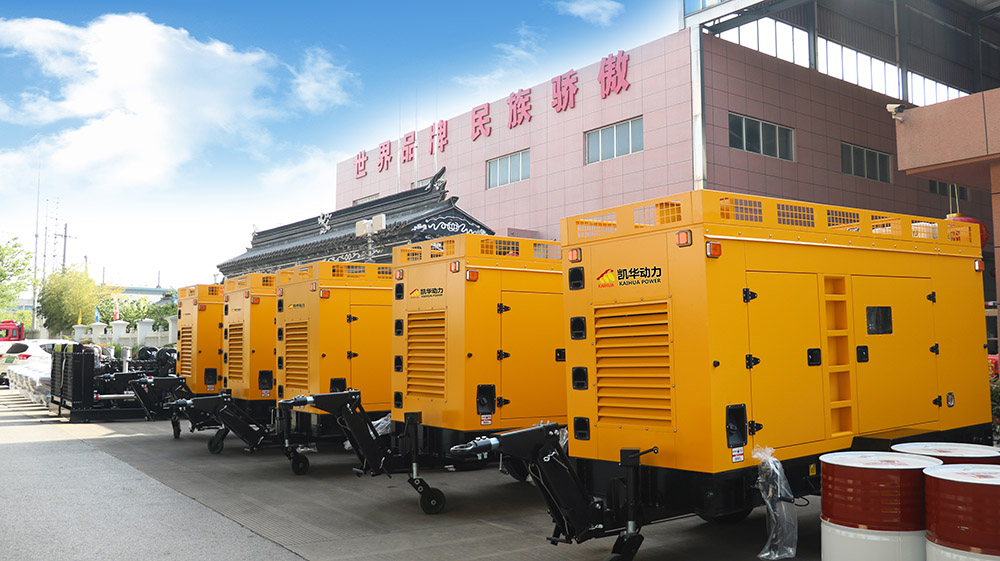
In the chaos of a live event, the last thing anyone wants is a sudden blackout. Behind the scenes, backup generators are primed to kick in within seconds of a power failure, but the real magic happens long before the doors open. Technicians run exhaustive load tests, simulating peak demand to ensure the system won't buckle when the lights, sound, and catering equipment all hit at once. It's not just about plugging in a machine—every cable route, transfer switch, and fuel reserve is meticulously mapped, often with redundant backups for the backups.
Modern event generators do more than just supply electricity; they practically think for themselves. Onboard sensors continuously monitor voltage, frequency, and engine temperature, making micro-adjustments to keep output as clean as grid power—critical for sensitive audio and lighting gear. If a glitch is detected, the system silently alerts off-site technicians, sometimes resolving issues before anyone on stage notices a flicker. This level of automation extends to fuel management, with telemetry tracking consumption in real time and auto-scheduling refuels so the party never stops for a gas run.
Then there's the human element that no smart generator can replace. Seasoned crew members walk the venue with thermal cameras, scanning for overheated connections or loose cables that could spell disaster. They listen to the hum of the engine, feeling for subtle vibrations that signal wear. It's a blend of old-school intuition and high-tech monitoring that keeps everything humming. When the headliner hits the final note and the crowd roars, nobody thinks about the quiet hum behind the stage—but that's exactly the point.
Choosing the Right Model: What to Look for Beyond the Specs
When you first start comparing different models, it's easy to get lost in the numbers—processing power, memory, storage. But those figures rarely tell the whole story. Real-world experience often hinges on the less glamorous details: how comfortable the device feels in your hand, how smoothly the interface adapts to your habits, and whether the battery actually lasts through a typical day of your specific routines. A spec sheet might boast all-day battery life, but if you're constantly hunting for a charger by late afternoon, those numbers mean little. Similarly, a 108-megapixel camera sounds impressive, yet if the software processing leaves photos looking artificial or flat, the high pixel count becomes irrelevant.
Beyond the hardware, think about the ecosystem and ongoing support. A model might be packed with cutting-edge features today, but without consistent updates, it can quickly feel outdated. Pay attention to the manufacturer's track record for rolling out software fixes and new capabilities over time—not just major version upgrades, but also smaller refinements that polish daily use. Community and accessory availability also matter more than you'd expect. A thriving ecosystem of third-party cases, peripherals, and troubleshooting resources can dramatically extend the lifespan and enjoyment of your device, while a neglected model often leaves you stranded when issues arise.
Finally, trust your own usage patterns over marketing claims. If you never play graphics-intensive games, a flagship GPU won't enhance your experience; if you rely on hands-free voice commands, a subpar microphone array will frustrate you daily. Take the time to read user reviews that focus on long-term impressions, not just honeymoon-phase excitement. Look for patterns in feedback—repeated complaints about durability or praise for a particular feature that reviewers continue to appreciate months later. In the end, the right model is the one that seamlessly integrates into your life and quietly solves problems you didn't realize you had, not the one that simply tops benchmark charts.
Built to Last: The Engineering Secrets That Boost Durability
True durability isn’t born from a single breakthrough but from an obsession with how stress travels through a structure. Engineers often speak of load paths as if they were living veins—each joint and material transition is studied under both everyday use and extreme overloads. Instead of simply bulking up components, they carve reliefs, taper sections, and orient grain structures so that forces dissipate before they can concentrate. This practice, refined in aerospace and bridge design, has quietly filtered into everyday objects, making everything from phone hinges to suspension forks survive far beyond their warranty periods.
One of the quietest revolutions in durability comes from material pairings that sacrifice themselves for the greater good. Take galvanic protection: by embedding a less noble metal, engineers direct corrosion to a replaceable anode rather than to a critical bearing surface. It’s a deliberate weakness that prevents hidden decay. Similarly, hydrophobic nano-coatings are no longer just a rain-repellent gimmick; they are designed into the weave of cables and connectors to block moisture migration long before it reaches sensitive contacts. These invisible layers form a kind of engineered patina that wears away so the underlying structure doesn’t have to.
Perhaps the most overlooked engineering secret is the deliberate introduction of compliance. Where old designs fought vibration with rigidity, today’s durable systems often float. A motor mount isn’t just a bracket—it’s a precisely tuned spring-mass damper that isolates harsh frequencies. Even in solid-state devices, flexible circuits and elastomeric underfills absorb thermal expansion mismatches that would otherwise shear solder joints. By letting things move in controlled, microscopic ways, engineers lock out the fatigue that kills products before their time. It’s a philosophy that turns fragility into resilience by rethinking what “strong” truly means.
Silent and Efficient: Innovations That Dampen Noise Without Losing Power
Modern engineering has turned its focus to a quiet revolution—literally. From vacuums that hum rather than roar to industrial machinery that whispers while delivering full torque, the quest to decouple sound from strength has birthed a wave of clever designs. These aren't just add-on mufflers; they are reimagined architectures where every curve, material, and airflow path is meticulously tuned. The result is equipment that respects the auditory environment without sacrificing a watt of output, proving that power and peace can coexist in the same machine.
The heart of these innovations often lies in fluid dynamics and material science. Blade profiles in fans and impellers are now biomimetic, mimicking the silent swoop of owl wings to slice through air with minimal turbulence. Meanwhile, composite housings layered with viscoelastic materials transform vibrations into negligible heat rather than audible noise. In pumps and compressors, active noise cancellation has moved beyond headphones, using microphones and speakers to emit inverse sound waves that nullify whine and hum right at the source. This synergy of passive and active strategies creates a soundscape where the loudest thing you hear might be the press of a button.
What's striking is how these advances blend into daily life. Kitchen appliances now run so quietly that conversations continue uninterrupted, and open-plan offices can house powerful shredders or printers without the usual acoustic assault. Even in heavy industry, where decibel levels once defined the workplace, operators find themselves checking indicator lights to confirm a machine is running. This quiet competence is more than a comfort—it's a signal that the technology is working efficiently, with less energy wasted as noise. It's an evolution that doesn't shout about its presence but subtly reshapes our expectations of what machines should sound like.
From Construction Sites to Outdoor Festivals: Real-World Versatility in Action
In the din of a construction site, where steel meets earth and weather shifts without warning, the equipment has to hold its own. It's not just about standing up straight—it's about providing reliable shelter for workers grabbing a quick break, a secure spot for tools, and a temporary base of operations that can take a beating from dust, wind, and heavy traffic. When a sudden downpour hits, the crew ducks under a sturdy, quickly deployed structure that has seen hundreds of setups, its scuffed feet and faded canopy telling stories of projects finished on time.
Shift the scene to a weekend music festival. The same rugged framework transforms into a welcoming shade haven, draped with colorful banners and surrounded by laughter. It offers a respite from the midday sun for families lounging on blankets, or becomes a bustling food stall where vendors dish out local fare. The versatility is silent but obvious—no one here thinks about the engineering, they just appreciate a place to unwind and connect.
That's the quiet brilliance of gear built for real life: it adapts without complaint, moving from the grit of a worksite to the laid-back energy of a community gathering. Wherever it's pitched, it brings along a no-fuss reliability that simply works, making every setting a little more functional and a lot more comfortable.
FAQ
A mobile trailer generator set is a complete power unit mounted on a trailer, combining an engine, alternator, fuel tank, and controls in a weatherproof enclosure. Unlike standard stationary generators, it's designed to be towed to remote sites, making it ideal for construction, events, or emergency response where fixed power isn't available.
Trailer generators offer significantly higher output, often 20 kW to over 500 kW, with larger fuel tanks for extended run times. They're more durable for heavy-duty use, have better weather protection, and can be transported easily without lifting, which isn't practical for suitcase units above a few kW.
Start by listing every device you plan to run, noting starting vs. running watts for motors. Add up running watts, then factor in the highest starting surge. Choose a generator with at least 20% headroom above that total to avoid overload and ensure longevity. Consult an electrician for three-phase or sensitive setups.
They can, but you need a model with an inverter or automatic voltage regulation (AVR) that provides clean, stable power with low total harmonic distortion (THD) below 5%. Standard construction-grade generators may have THD over 15%, which can damage sensitive gear, so always check specs or add a power conditioner.
Regular oil and filter changes based on hours of use, coolant level checks, battery terminal cleaning, and fuel system care (especially for diesel to prevent algae). Load bank testing once a year helps avoid wet stacking. Don't ignore the trailer itself: inspect tires, brakes, and lights before towing.
Brands like Cummins, Caterpillar, Kohler, and Generac have strong reputations, but also look at specialized mobile power companies like MQ Power, Wacker Neuson, and Doosan. Reliability often depends on engine tier and dealer support, so pick a brand with nearby service centers.
Look for automatic shutdown features for low oil pressure and high temperature, ground fault circuit interrupters (GFCI) on outlets, and proper grounding lugs. Ensure the unit meets EPA or local emission standards, and verify the trailer has functional breakaway brakes and lighting. Ask about rainproofing if operated outdoors uncovered.
Smaller units (under 10,000 lbs) can be towed with a half-ton pickup or SUV equipped with a class IV hitch and trailer brake controller. Larger rigs need a medium or heavy-duty truck. Always check the trailer's GVWR against your vehicle's towing capacity and ensure the load is balanced properly on the hitch.
Conclusion
Mobile trailer generator sets have reshaped portable power by combining heavy-duty output with true mobility. Unlike stationary units, these compact powerhouses are mounted on trailers designed for quick deployment, making them ideal for construction sites, emergency response, and outdoor events. Their real-world versatility is evident when you see them seamlessly powering everything from a rock concert's lighting rigs to a remote worksite's heavy machinery. Beyond raw specs, choosing the right model demands attention to runtime efficiency, hookup ease, and weather-resistant build. Modern engineering has also tackled two long-standing complaints: noise and fragility. Innovations in sound-dampening enclosures and airflow design now let generators run surprisingly quietly without sacrificing wattage, while reinforced frames and vibration isolation systems dramatically increase longevity.
What truly sets today's top picks apart is how they balance silence, strength, and smart features. Advanced muffling materials and isolation mounts cut decibel levels so effectively that festival crews can place units near audience areas without disturbance. At the same time, rust-proof coatings, heavy-duty axles, and automated voltage regulation ensure these generators survive rough transport and unpredictable loads. Whether supporting a film shoot in a nature preserve or keeping a disaster relief hub operational, the latest trailer-mounted units deliver dependable power that doesn't scream for attention. They aren't just tools—they're reliable partners engineered for the long haul, proving that portable energy can be both discreet and tough.
Contact Us
Contact Person: Ms. Lu
Email: [email protected]
Tel/WhatsApp: 8618917899306
Website: https://www.hichaipower.com