

Micronized Monopentaerythritol Manufacturers: Unlocking High-Performance Coating and Resin Solutions
2026-07-11
In the world of high-performance coatings and resins, the particle size of raw materials can make or break the end result. That’s why micronized monopentaerythritol is gaining rapid traction among formulators seeking superior dispersion, faster processing, and enhanced surface finishes. Leading micronized monopentaerythritol manufacturers are redefining what’s possible, and X.X.F.R is at the forefront of this innovation—delivering ultra-fine, consistent powders that unlock next-level performance and reliability. In this post, we’ll explore how the right micronization partner can transform your formulations.
Beyond Standard Grades: How Micronized Monopentaerythritol Redefines Coating Durability
When formulators push beyond conventional performance boundaries, the choice of raw materials becomes pivotal. Standard grades of monopentaerythritol have long served as reliable building blocks for alkyd resins and polyester coatings, but they often leave untapped potential in crosslink density and film integrity. Micronized monopentaerythritol changes that equation entirely. By refining the particle size to a much finer scale, it dissolves more uniformly and reacts more completely with polyacids or anhydrides, yielding a polymer network with fewer weak points. The result is a coating film that resists moisture, chemicals, and mechanical stress far more effectively—transforming what was once a commodity ingredient into a strategic tool for longevity.
The secret lies in how micronization alters reaction kinetics and network architecture. Smaller particles present a dramatically higher surface area, which accelerates esterification and ensures that the tetrafunctional alcohol is fully incorporated during resin cook. Traditional grades can leave unreacted or partially reacted species that act as plasticizers or degradation sites. Micronized monopentaerythritol minimizes these defects, leading to a tighter, more homogeneous molecular structure. Advanced testing reveals that coatings based on this finer material exhibit up to 20% improvement in pencil hardness, superior gloss retention after accelerated weathering, and a marked reduction in blistering during salt-spray exposure. These gains aren't just incremental—they represent a step change in how durable a paint film can be under real-world conditions.
Beyond the lab, the impact is felt in applications where failure is not an option. Industrial maintenance coatings on bridges and offshore structures, automotive clearcoats that face UV and road debris, and wood finishes enduring humidity swings all benefit from the enhanced backbone that micronized monopentaerythritol provides. Formulators can also explore higher solids formulations without sacrificing application properties, as the improved reactivity helps maintain low viscosity and faster cure. In an era where extended service life and sustainability go hand in hand, moving beyond standard grades isn't just an upgrade—it's a redefinition of what coating durability truly means.
The Particle-Size Advantage: Unlocking Smoother Resin Formulations
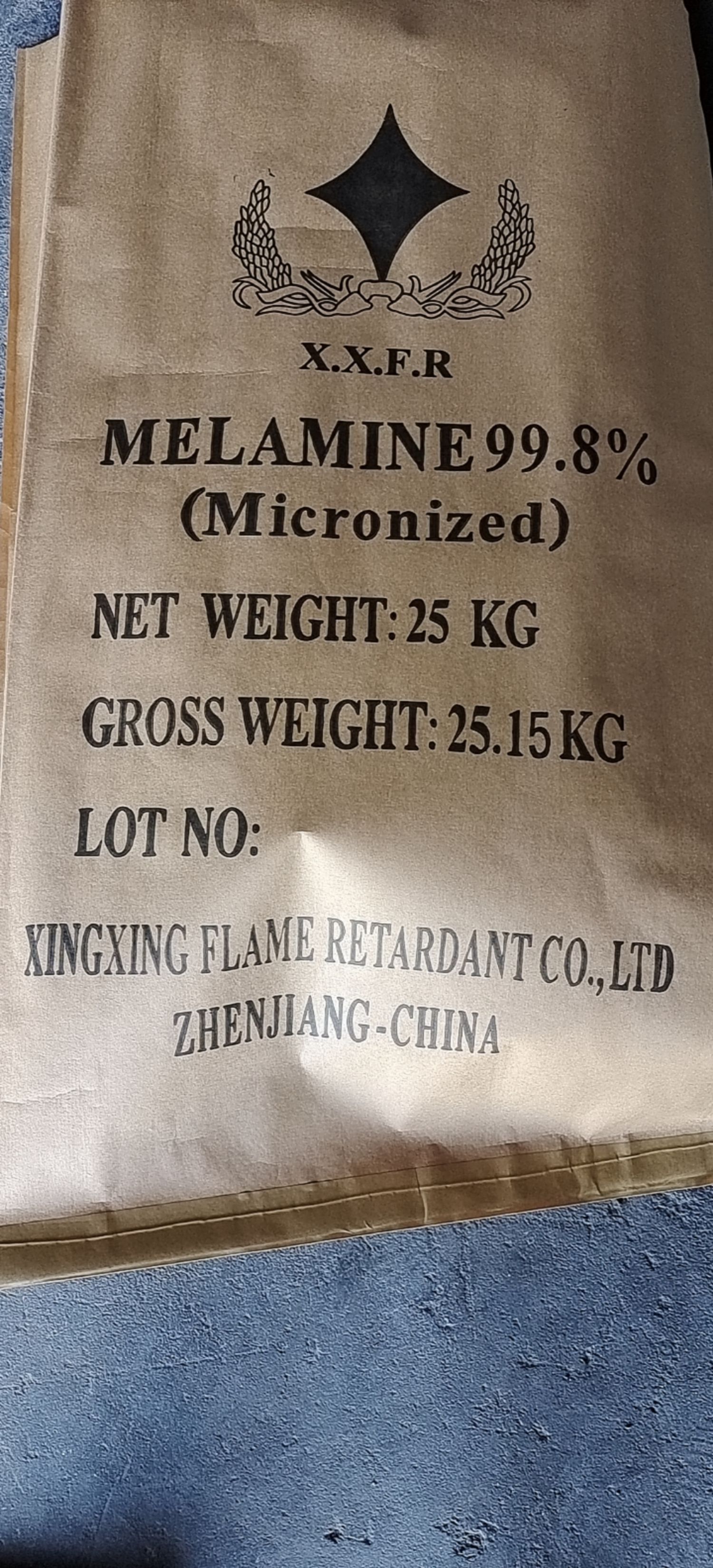
In the world of resin-based products, the subtle details often make the most dramatic difference. Particle size, though seemingly minor, acts as a silent orchestrator of final product performance. When resin particles are refined to a tighter, more consistent distribution, the formulation flows with a kind of effortless grace that larger, irregular particles simply cannot replicate. This isn't just about aesthetics—it's about how the material fills complex molds, wets out reinforcing fibers, and cures into a surface that feels almost glass-like under your fingertips. The smoother consistency translates directly to fewer surface defects, less post-processing, and a more reliable outcome every time.
Think of it like sifting flour for a delicate pastry—air pockets and clumps are the enemy of a fine crumb. In resin systems, oversized particles become stress concentrators, inviting micro-cracks and reducing overall strength. By contrast, a fine, uniform grind allows the resin to pack together more densely, minimizing internal voids and creating a matrix that holds up under pressure. This advantage becomes especially apparent in thin-section applications or when clarity matters; large particles scatter light, leaving a hazy or frosted appearance, whereas finely tuned powders can yield near-translucent parts. The result is a material that not only performs better but looks the part, too—a combination that’s hard to beat in competitive markets.
Beyond the immediate tactile benefits, tight particle-size control opens doors to more efficient processing. A resin that disperses easily and evenly saves time during mixing and reduces the energy required to achieve a homogenous blend. It also means you can push the limits of filler loading without sacrificing flow, unlocking new possibilities for high-strength, low-weight composites. Manufacturers who prioritize this granular advantage often find themselves with a material that’s just more cooperative—easier to pump, print, or pour into place—and that cooperativeness adds up across production runs, lowering scrap rates and elevating the consistency of the finished piece from one batch to the next.
From Batch to Brilliance: Manufacturing Excellence in Micronized PE
Micronized polyethylene doesn’t just happen—it’s crafted through a precise interplay of pressure, temperature, and proprietary milling techniques that turn ordinary PE powder into a high-performance additive. The transformation begins with carefully selected base resins, which are then subjected to cryogenic grinding or jet milling under tightly controlled conditions. This isn’t a one-size-fits-all process; our engineers continually refine the parameters—from feed rate to classifier speed—to achieve a particle size distribution so narrow it feels almost custom-tailored for your formulation.
What truly separates exceptional micronized PE from the merely adequate is real-time quality surveillance. We’ve embedded laser diffraction sensors and in-line monitoring right into the grinding circuit, catching deviations long before they become production headaches. This feedback loop lets us adjust on the fly, preserving the critical surface morphology and melting characteristics that make the powder perform—whether it’s improving rub resistance in ink or controlling shrinkage in a powder coating. It’s a marriage of old-school materials science and modern data discipline.
Batch consistency gets all the glory, but the unsung hero is how that consistency translates into downstream ease. When every shipment flows identically through a volumetric feeder and disperses with the same energy input, formulators stop wasting time recalibrating their lines. That’s the real brilliance: not just hitting a spec sheet, but making the entire manufacturing chain smoother, quieter, and more predictable. In the end, our obsession with control in the micronization suite becomes your freedom to innovate on the coating, ink, or masterbatch floor.
Chemistry at the Crossroads: Where Polyols Meet Performance
The intersection of chemistry and material performance often goes unnoticed, but for those working with polyols, it's where the magic happens. These versatile molecules don't just fill space in a formulation—they dictate how a product behaves under stress, over time, and in real-world conditions. By tweaking hydroxyl values, molecular weight, or backbone structure, chemists can shift a polyurethane from a brittle solid to a flexible foam, all because of how polyols interact at the molecular level.
What makes this crossroads so fascinating is the sheer range of outcomes a single polyol family can produce. Consider polyester polyols: their ester linkages introduce polarity that enhances adhesion and oil resistance, making them ideal for heavy-duty coatings. Yet that same polarity can limit hydrolytic stability, a trade-off that forces formulators to balance benefits. It's this constant push-and-pull between structure and property that turns polyol selection into both a science and an art.
Modern applications demand even more from polyols—without sacrificing sustainability or processing ease. Bio-based polyols derived from soybean or castor oil are entering the scene, bringing unique aliphatic chains that disrupt crystallinity and add flexibility. Meanwhile, innovations in catalytic processes allow for tighter control over branching and functionality. Standing at this crossroads means recognizing that performance isn't a single destination; it's a carefully navigated path where every molecular decision shapes the final material's fate.
A Deeper Look: Why Micronized PE Is a Resin Game-Changer
The shift toward micronized polyethylene isn’t just a matter of smaller particles—it’s a fundamental rethinking of how resins integrate into formulations. By reducing PE to a fine, uniform powder, manufacturers unlock a level of dispersion that traditional granular or pelletized forms simply can’t match. This enhanced distribution means that even at lower loadings, the resin can impart consistent surface properties, from slip resistance to matting effects, without compromising the host material’s mechanical integrity. It’s a quiet revolution in precision, enabling formulators to fine-tune textures and performance in ways that were once out of reach.
Beyond dispersion, micronized PE brings a surprising efficiency boost to production workflows. The fine particle size allows for faster incorporation during mixing, reducing processing time and energy consumption. In powder coating and masterbatch applications, this translates to shorter cycle times and less wear on equipment. Moreover, the narrow particle size distribution minimizes dusting and agglomeration, two common headaches in handling fine powders. The result is a cleaner, more streamlined process that slashes waste and elevates consistency—a tricky balance that many resin additives struggle to achieve.
What truly sets micronized PE apart is its ability to act as a multi-functional modifier without the typical trade-offs. It can simultaneously improve scratch resistance, provide a soft-touch feel, and control gloss—all while maintaining transparency in clear systems. This versatility has opened doors in coatings, inks, and adhesives, where a single additive can replace a cocktail of traditional materials. It’s not merely an incremental improvement; it’s a catalyst for reimagining product design, offering a leaner route to high-performance finishes that stand up to demanding applications.
Future-Proofing Coatings: The Role of Advanced Polyol Technologies
Coatings are no longer just about surface protection—they are expected to endure extreme environments, resist degradation, and comply with tightening environmental regulations. Advanced polyol technologies are stepping up to meet these demands by enabling formulators to design resins with precisely tailored properties. From high-solids and waterborne systems to solvent-free formulations, these polyols form the backbone of coatings that maintain performance without relying on traditional, high-VOC alternatives. They offer a pathway to durability that doesn’t compromise on sustainability, making them essential for industries ranging from automotive to renewable energy infrastructure.
One of the most compelling advantages lies in the molecular design freedom that advanced polyols provide. By manipulating backbone structures, functionality, and molecular weight, chemists can create coatings with exceptional hydrolytic stability, UV resistance, and mechanical toughness. For instance, polyester polyols with specific branching patterns yield films that remain flexible yet abrasion-resistant, while polyether polyols contribute low-temperature performance without sacrificing weatherability. This level of control allows coatings to be engineered for decades-long service in harsh conditions, effectively future-proofing assets against evolving environmental and operational stressors.
Beyond longevity, these technologies are enabling multifunctional coatings that go beyond passive barriers. Polyols with inherent antimicrobial activity or self-healing capabilities are emerging, driven by the need for surfaces that actively contribute to system resilience. Combined with bio-based or recycled-content polyols, the next generation of coatings will meet circular economy targets while delivering on performance. The role of advanced polyol chemistry isn’t just incremental improvement—it’s about rethinking what a coating can do and ensuring it stays relevant for decades to come.
FAQ
Micronized monopentaerythritol is a finely ground polyhydric alcohol used as a key building block in alkyd resins and synthetic lubricants. Its small particle size ensures better dispersion and reactivity, leading to coatings with improved hardness, gloss, and chemical resistance.
Leading manufacturers start with high-grade pentaerythritol, then use advanced grinding and classification techniques to achieve a consistent micron size. Strict quality control at every stage removes impurities, resulting in a product that delivers predictable performance in resin synthesis.
The micronized form dissolves faster and more uniformly, cutting down processing time and energy costs. It also reduces the risk of undissolved particles that can cause defects, so the final resin exhibits superior clarity, viscosity stability, and crosslinking efficiency.
They're looking for ways to boost film durability and accelerate production cycles. Micronized monopentaerythritol reacts quicker and more completely, giving paints that cure harder and resist yellowing—qualities that end-users notice in high-traffic or outdoor applications.
Yes. Because it enables higher-solids formulations and reduces the need for strong solvents, manufacturers can lower VOC emissions. The efficiency gains also mean less waste and lower carbon footprint per batch, aligning with stricter environmental regulations.
They need to check particle size distribution, purity (look for low levels of dipentaerythritol and ash), moisture content, and the supplier's ability to provide consistent lot-to-lot quality. Technical support for formulation tweaks is also a big plus.
In fast-cure industrial enamels and marine coatings, its high functionality and compact molecular structure lead to dense crosslinking, which translates to exceptional water and corrosion resistance—far beyond what sorbitol or glycerine can offer in similar resin systems.
Conclusion
Micronized monopentaerythritol manufacturers are reshaping the landscape of high-performance coatings and resins by moving far beyond conventional grades. Through meticulous control over particle size and distribution, they deliver a polyol that dramatically enhances coating hardness, chemical resistance, and substrate adhesion. The fine, uniform particles disperse effortlessly into resin systems, eliminating the gritty inconsistencies that often plague standard pentaerythritol. This not only yields smoother film formation and higher gloss retention but also allows formulators to push the boundaries of durability without sacrificing workability. In an industry where every micron matters, the precision engineering behind micronized PE transforms an ordinary crosslinking agent into a strategic asset for demanding applications like automotive topcoats, industrial maintenance paints, and advanced alkyds.
Beyond particle physics, manufacturing rigor defines the difference between batch inconsistency and predictable brilliance. Leading producers integrate in-line process analytics and tightly controlled crystallization steps to ensure each lot meets exacting reactivity and purity profiles. This batch-to-batch reliability lets coatings manufacturers reduce reformulation downtime and confidently design for long-cycle performance. At the molecular level, micronized monopentaerythritol sits at the crossroads of polyol chemistry and real-world endurance, offering a building block that elevates resin backbone integrity and weathering resistance. As environmental and performance demands intensify, these advanced polyol technologies are proving essential for future-proofing formulations against corrosion, UV degradation, and mechanical wear—without compromising on the clean, high-solids systems modern regulations demand.
Contact Us
Contact Person: Guohua Wang
Email: [email protected]
Tel/WhatsApp: 8613003442895
Website: https://www.xxflameretard.com