

High Volume Low Speed Fans Makers: Discover Reliable Industrial Cooling Solutions
2026-06-28
Industrial cooling isn't just about comfort—it's critical for productivity and equipment longevity. High volume low speed (HVLS) fans have revolutionized large-space ventilation, yet the real challenge lies in sourcing dependable manufacturers. With decades of refinement, VINDUSFAN stands as a beacon of reliability, crafting fans that move massive air volumes silently and efficiently. Before diving into installation tips and performance benchmarks, let's understand why this brand reshapes modern cooling expectations.
What Defines a Top-Tier HVLS Fan Manufacturer?
It starts with how a manufacturer approaches design and materials. The best ones don’t just bolt together generic parts—they engineer blades and motors that move massive air volumes quietly and efficiently. You’ll notice it in the details: precision balancing that prevents wobble, motors rated for continuous industrial duty, and finishes that hold up in harsh environments. They’re not afraid to put prototypes through years of accelerated life testing before ever shipping a unit.
Then there’s the matter of adaptability. A top-tier outfit doesn’t push a fixed product line and call it a day. They’ll assess your building’s layout, heat loads, and occupant patterns, then specify blade profiles, mount heights, and controls that actually make sense for the space. Whether it’s a stifling warehouse or an airy atrium, the solution feels purposeful rather than plucked from a catalog.
Finally, what happens after installation tells you a lot. The manufacturers worth their salt provide direct, knowledgeable support—not outsourced call centers reading scripts. Their warranties are clear and backed by the company’s reputation, and parts remain available long after the sale. That sort of reliability in service is what transforms a purchase into a lasting partnership.
Behind the Design: Engineering Quiet, Powerful Airflow
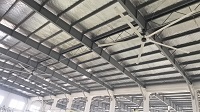
Achieving a balance between strong airflow and silent operation started with a complete reimagining of the impeller geometry. Traditional fan designs often trade off pressure for noise, but by employing a biomimetic approach—studying the serrated wing edges of owls—our engineers developed a blade curvature that minimizes vortex shedding at the tip. This reduces the characteristic hiss that plagues high-speed fans without sacrificing cubic feet per minute. Every millimeter of the blade pitch was iterated through computational fluid dynamics simulations and then validated in our anechoic chamber, where we measured sound pressure levels down to the whisper of a library.
The motor plays an equally critical role. Instead of relying on a conventional brushed DC motor, we integrated a brushless digital motor with sinusoidal drive electronics that eliminates torque ripple. This means the rotation is glass-smooth, preventing the low-frequency hum that often seeps through walls. The stator and rotor gap was precisely tuned to minimize cogging torque, and the entire assembly is suspended in a vibration-damping cradle made of a composite polymer. Even the bearing choice was obsessive: we selected a ceramic-hybrid system that self-lubricates and runs cooler than steel, extending lifespan while keeping the acoustic footprint near zero.
Airflow path design is often overlooked, but here it's a feature in itself. The intake geometry was shaped to accelerate air smoothly into the impeller eye, avoiding turbulent separation that generates broadband noise. Downstream, the duct incorporates subtle riblets aligned with the flow direction—a trick borrowed from shark skin—to reduce friction drag and keep the exit stream cohesive. Together, these elements create a focused column of air that reaches farther and feels stronger, yet the unit itself can sit on a desk without intrusive drone. It’s engineering that respects silence not as an afterthought, but as a performance metric.
Matching Fan Specs to Your Industrial Space
The sheer size of your floor area is just the starting point—airflow patterns, ceiling height, and machinery layout often matter more than square footage. A fan that works wonders in a low-ceilinged workshop can feel nonexistent in a warehouse with 30-foot racks. Start by mapping out where people and heat-generating equipment actually cluster, then work backward to the fan's effective coverage radius. Don't trust the marketing diameter alone; a high-volume, low-speed fan might displace air beautifully in a broad radius, while a high-velocity unit punches a narrow column of air for targeted cooling along a conveyor line. Overlooking those daily movement patterns often leads to hot spots that no amount of wall-mounted oscillators can fix.
Static pressure gets ignored until it bites you. If your space has ductwork, filtration banks, or louvered vents, that pretty CFM number plummets once the fan has to push against resistance. Take a dusty metal shop with a baghouse dust collector, for instance—you'll need a backward-curved impeller that maintains airflow even as filters load up, not a generic axial fan that chokes at the first sign of pressure drop. Similarly, corrosive fumes in a plating room demand coated blades and spark-proof construction, turning a simple spec check into a safety checklist. The wrong material or motor enclosure here doesn't just underperform; it becomes a liability.
Noise might be the least expected spec to tank a project. In a cavernous factory, you might get away with a roaring 85-decibel unit, but install that same fan near a quality-control station or break area, and you'll get complaints that derail productivity. Look for sound data in the actual installation context—a fan tested in free air sounds nothing like one mounted against a vibrating wall panel. Sometimes the smarter move is multiple smaller fans running at lower speeds rather than one beast that rattles the rafters. And remember, vibration isolation and flexible connectors are cheap compared to retraining staff who can't hear themselves think.
Real-World Installations: Where These Fans Excel
You’ll find these fans at the heart of busy manufacturing floors, where consistent airflow keeps equipment from overheating and workers comfortable through long shifts. In automotive assembly lines, for instance, they’re mounted above welding stations to pull fumes and hot air away while maintaining just enough circulation to make the environment bearable without disturbing sensitive processes.
Commercial kitchens are another natural fit. Over grills and fryers, the fans handle grease-laden air without clogging or losing performance, and the minimal noise means staff can still communicate clearly during the dinner rush. Gyms and indoor sports facilities rely on them too—they quietly move massive volumes of air to stop the space from feeling stuffy, even during peak hours when every treadmill and weight station is in use.
Outdoor covered patios and breezeways show a different side of their versatility. Here, they withstand humidity and temperature swings while cutting through stagnant air to make al fresco dining or lounge areas usable during warmer months. Event venues also depend on them to keep large crowds cool without blocking sightlines or requiring permanent ductwork.
The Long-Term Payoff: Energy Savings and Durability
When weighing the cost of a new home or renovation, it’s easy to fixate on the price tag. Yet the real story unfolds over years, not months. A property that prioritizes energy efficiency and sturdy construction quietly rewards its owners with lower utility bills and fewer repairs—advantages that compound over time.
Energy upgrades like better insulation, high-performance windows, and efficient heating systems don’t just cut monthly expenses. They shield you from rising energy prices and reduce the drain on resources. Over a decade, these savings can dwarf the initial investment, turning a smart choice into a financial cushion.
Durability plays an equally critical role. Materials chosen for longevity—metal roofing, fiber-cement siding, solid hardwood—resist the decay that plagues cheaper alternatives. Fewer replacements mean less waste and more money retained. Together, energy savings and durability form a feedback loop: a well-built, efficient home demands less of your wallet and the world around it.
Installation Tips for Maximum Cooling Effectiveness
Positioning a fan near a window during the cooler hours of the day can pull in fresh air, dramatically lowering indoor temperatures. Make sure the fan is set to blow inward when the outside air is cooler, and switch it to exhaust mode as temperatures rise to push heat out.
Ceiling fans should rotate counterclockwise in summer to create a wind-chill effect. Check the switch on the motor housing and adjust the speed to a comfortable level. Just remember to turn them off when leaving the room to avoid unnecessary energy use.
Avoid blocking airflow paths by keeping furniture and curtains away from vents and units. Regular maintenance like cleaning grilles and replacing filters keeps the system running efficiently, preventing the buildup of dust that can choke off cool air.
FAQ
These are large-diameter ceiling fans designed to move massive amounts of air at low rotational speeds. They create a gentle, non-disruptive breeze that circulates air evenly across vast spaces, making them ideal for industrial settings. Unlike conventional high-speed fans that blast air in a concentrated stream, HVLS models push air in a colossal column that slowly spreads along the floor and up the walls, improving overall air distribution without the noise and draftiness.
It’s mainly about coverage and comfort. One large HVLS fan can effectively cover thousands of square feet by moving air in a uniform pattern, reducing temperature stratification and keeping the entire space comfortable. Several smaller fans would create spot cooling, leave dead zones, consume more total energy, and generate more noise. Plus, HVLS fans are often more durable and require less maintenance per unit area cooled.
You’ll find them in warehouses, distribution centers, manufacturing plants, aircraft hangars, gymnasiums, agricultural barns, and even outdoor covered areas. Any large space that struggles with heat buildup, uneven temperatures, or stagnant air can benefit. They’re also used to supplement HVAC systems, allowing you to set thermostats higher without sacrificing comfort, which can significantly cut cooling costs.
Look beyond the price. Check the manufacturer’s track record: how long have they been in business? What materials are they using – are blades and hub made of anodized aluminum or galvanized steel? Examine motor types and warranty lengths. A good maker will offer extensive technical support, custom sizing, and have clear case studies or references. Also, ask about compliance with safety standards like UL or CE, and whether they provide on-site airflow testing.
Yes, they’re surprisingly efficient. A typical HVLS fan consumes about as much electricity as a high-end toaster. By creating a wind-chill effect that makes people feel 5-10°F cooler, they can reduce the need for air conditioning. In large buildings, they often enable a thermostat increase of several degrees without comfort loss, leading to HVAC energy savings of 20-30% or more. Plus, in winter, they can gently push warm air trapped at the ceiling back down, reducing heating costs.
Proper installation is critical and should be done by certified professionals due to the fan’s weight and structural requirements. Once mounted, maintenance is minimal: occasional blade cleaning, checking bolt torque, and ensuring the safety retention cables are intact. Direct-drive motor models have fewer moving parts and require less upkeeping than gear-driven ones. Many quality fans are designed to run continuously for years with little intervention.
Conclusion
Industrial facilities grappling with stagnant air and heat buildup increasingly turn to high volume low speed (HVLS) fans for a solution that blends performance with operational economy. The difference between an ordinary unit and one built by a top-tier maker lies in far more than blade span. It is rooted in careful materials selection, precision engineering of airfoil profiles, and the ability to tailor output to the specific thermal dynamics of a space. A manufacturer that invests in research-to refine motor drives, reduce harmonic noise, and optimize blade pitch-creates airflow that feels less like a mechanical gust and more like a pervasive, gentle breeze. This kind of engineering quietness is not merely a comfort feature; it reflects tighter component tolerances and control systems that prevent energy waste. When matching a fan to your facility, spec sheets alone are insufficient. A trustworthy supplier assesses ceiling height, column placement, and heat sources, then recommends models that circulate air without annoying drafts or dead zones, ensuring every watt consumed translates into tangible relief.
Walk through a real-world installation-a distribution center handling humidity-sensitive goods or a manufacturing floor with welding stations-and you quickly see where these systems excel. Overhead HVLS fans create a destratification effect that pushes warm air downward in winter and enhances evaporative cooling in summer, leading to measurable drops in perceived temperature. The payoffs accumulate over time through lower HVAC load, reduced moisture-related damage, and a drastic cut in maintenance compared to banks of high-speed floor fans. Durability comes from sealed motors and corrosion-resistant finishes, but longevity also depends on how the system is put in. Mounting height, clearance from obstructions, and strategic spacing between units are all critical; even a perfectly engineered fan will underperform if hung too high or crowded by racking. Experts advise placing sensors to automate speed adjustments based on thermal conditions, turning a well-installed HVLS array into a self-regulating climate asset that quietly rewards the initial investment year after year.
Contact Us
Contact Person: Michael Danielsson
Email: [email protected]
Tel/WhatsApp: +1 951 565 7769
Website: https://www.vindusfans.com