

China Piezo Inkjet Printer Technology: Precision Printing Redefined for Modern Industries
2026-05-18
From electronics to packaging, precision is no longer a luxury—it's a requirement. China's piezo inkjet printer technology is rewriting the rules, delivering microscopic accuracy and unmatched versatility for modern production lines. At the heart of this shift is Danmajet, a brand pushing the boundaries of what's possible with drop-on-demand innovation. Dive in to see how this technology is reshaping industries, one precise droplet at a time.
The Core Mechanics Behind China's Piezo Inkjet Breakthrough
China's recent strides in piezo inkjet technology stem from a fundamental rethinking of droplet formation and ejection control. Unlike conventional thermal bubble-driven printheads, piezo systems rely on the mechanical deformation of a crystal under voltage. The breakthrough lies in a new multi-layer actuator design that achieves micron-level precision while drastically reducing crosstalk between neighboring nozzles. This design uses a proprietary composite ceramic with a high piezoelectric coefficient, allowing for faster and more uniform droplet ejection across thousands of nozzles simultaneously. The result is not just higher printing resolution but also a wider compatibility with fluids of varying viscosity and surface tension—pushing the technology beyond office printing into industrial manufacturing.
At the heart of this advancement is a closed-loop waveform optimization algorithm that adapts in real time to ink properties and nozzle conditions. Instead of relying on fixed drive pulses, the system continuously monitors meniscus motion and adjusts the voltage waveform shape to maintain consistent drop volume and velocity. This dynamic adjustment compensates for temperature variations, ink aging, and minor nozzle imperfections—common pain points in high-speed printing. The approach borrows ideas from adaptive signal processing but implements them in a compact, low-cost ASIC that can be embedded directly into the printhead. The outcome is a dramatic reduction in print defects and a substantial increase in maintenance intervals, directly addressing the reliability concerns that have historically held back piezo inkjet adoption in commercial settings.
What truly sets this Chinese breakthrough apart is the integration of these hardware and software innovations into a scalable manufacturing process. By leveraging existing MEMS fabrication facilities, the team developed a wafer-level packaging method that aligns the actuator, nozzle plate, and fluid channels with sub-micrometer accuracy. This not only slashes production costs but also ensures uniformity across large arrays—a critical requirement for page-width print bars. Moreover, the modular design allows individual nozzle chips to be swapped without discarding the entire head, a sustainability feature that aligns with the growing demand for repairable electronics. Taken together, these advances mark a shift from playing catch-up to defining the next generation of precision liquid deposition technology.
Pushing Precision Limits in High-Stakes Manufacturing
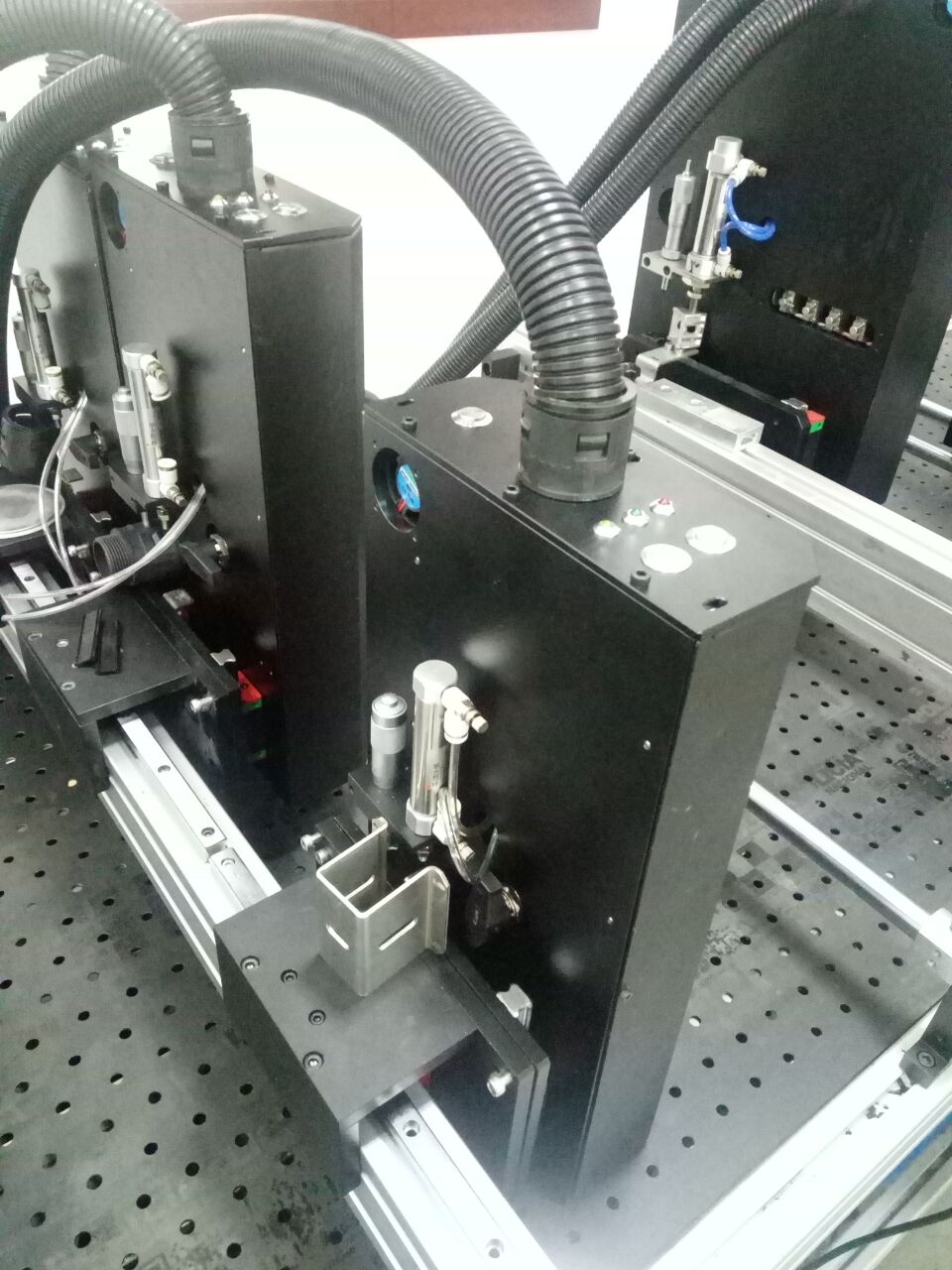
In high-stakes manufacturing, where a micron can mean the difference between triumph and catastrophic failure, pushing precision limits is not just a goal—it's a necessity. Fields like aerospace, medical devices, and semiconductor fabrication operate under unforgiving demands where components must perform flawlessly in extreme environments. Consider turbine blades spinning at supersonic speeds or pacemaker parts regulating life itself; the slightest deviation could lead to mission-critical disasters or loss of life. This relentless pursuit of accuracy drives a culture where tolerances are constantly redefined, and conventional boundaries are left far behind.
Achieving such precision often demands a fusion of advanced metrology, real-time process control, and cutting-edge materials. Manufacturers deploy laser interferometers and white-light scanning systems that capture surface roughness down to the nanometer level, feeding data into adaptive machining algorithms. In a Swiss-style CNC workshop, for instance, the dialogue between tool and workpiece becomes a finely orchestrated dance, with thermal expansion compensated millisecond by millisecond. It’s not uncommon for engineers to design custom fixturing that holds parts with microscopic force variations, turning an ordinary milling center into a palace of exactitude.
Yet the real edge lies in anticipating what can’t be measured directly. Veteran machinists develop an almost instinctual feel for material behavior, knowing when a subtle vibration foreshadows tool wear before any sensor triggers an alert. This human element merges with machine intelligence in a quiet symbiosis, where experience balances digital precision. Ultimately, pushing precision limits is about crafting a production environment where error is not just corrected but preempted, reshaping how entire industries approach quality in the unforgiving theater of high-stakes manufacturing.
Adaptive Ink Handling for Unconventional Substrates
Printing on unconventional surfaces—think rippled cardboard, glossy plastics, or textured fabrics—demands more than a one-size-fits-all approach. Ink that performs well on standard paper often beads up, spreads unevenly, or dries too quickly when faced with non-porous or irregular materials. The key is recognizing that each substrate has its own surface energy and absorption rate, which directly impact adhesion and image quality. Without tailored adjustments, even the most advanced printers can produce blurry, faded, or peeling results.
Modern systems tackle this by continuously analyzing substrate conditions and fine-tuning ink delivery in real time. Sensors measure surface roughness, moisture levels, and reflectivity just before printing, then software algorithms adjust droplet size, viscosity, or array voltage on the fly. Some setups incorporate heated platens to control drying speed on absorbent substrates, or use ultrasonic agitation to keep pigments evenly suspended when dealing with tricky metallic inks. This kind of adaptability means the printer can switch from labeling vinyl stickers to decorating cork panels without manual recalibration.
The real-world payoff is evident in reduced waste and expanded creative range. Manufacturers working with mixed-material packaging or prototype textiles no longer need to run separate, costly test batches for each substrate. Consistent, sharp output also lowers the rejection rate in short-run production. On the design side, artists and engineers get the freedom to experiment with found materials—rust-treated steel, uneven ceramics—and still achieve precise, durable prints. It’s a shift that treats the quirks of unconventional substrates not as limitations but as parameters to work with.
Energy Efficiency as a Quiet Competitive Edge
Most companies chase flashy differentiators—proprietary algorithms, viral marketing, celebrity endorsements. But one of the most potent advantages sits almost invisibly in the background: energy efficiency. Not the kind you brag about in sustainability reports, but the operational kind that quietly shrinks overhead, extends equipment life, and frees up cash that rivals burn through without noticing. It’s not glamorous, but it compounds. A factory cutting power use by 15% doesn’t just save on bills; it builds a buffer against volatile energy prices that competitors have to pass on to customers.
This edge doesn’t require a PR campaign. When your data center uses half the cooling of an industry-average facility, your uptime margins get fatter, and your pricing can undercut without sacrificing service quality. Engineers and operations teams feel the difference daily—fewer emergency calls, less heat stress on components, more predictable performance. Customers might never see it, but they experience it as reliability and cost stability, the kind that slowly wins long-term contracts over flashy but fragile alternatives.
The real magic is that efficiency stacks quietly across processes. Lighting upgrades, HVAC tuning, compressed-air fixes—each seems trivial, but together they reshape the P&L. While rivals chase the next big thing, you’re banking incremental gains that don’t depend on market sentiment. That’s how a quiet operational choice becomes a durable competitive moat.
Redefining Speed Without Sacrificing Detail
Fast results often come at the cost of depth, but what if you didn't have to choose? Modern tools are engineered to deliver outcomes at a pace that matches your need for agility while preserving the rich, granular insight that drives real decisions. The technology processes complex data streams in fragments of a second, yet every nuance, every subtle pattern, is captured and presented with clarity. It's not about racing through tasks; it's about enabling a workflow where high velocity and meticulous precision coexist naturally.
Behind this balance lies an architecture that prioritizes intelligent resource allocation. Instead of brute-forcing computations, the system adapts in real time, dedicating more cycles to areas that require deeper inspection while swiftly handling routine elements. The result feels seamless—like a craftsman who works with both swift confidence and unwavering attention. You don’t sacrifice the texture of information for the sake of speed; you get a comprehensive view that reveals not just what happened, but why it matters, all without the wait you’ve grown to expect.
This shift changes how you interact with information. Reports that once took hours now arrive in moments, yet they’re layered with context and detail that invite immediate understanding. It’s a quiet revolution in performance, one that redefines expectations not by asking you to settle, but by refining the very notion of what accelerated work should deliver. Speed becomes not a trade-off, but a partner to depth, letting you move forward faster without ever looking back to check what was missed.
From Niche Labs to Global Production Floors
It started in a cramped campus lab, where outdated oscilloscopes flickered over hand-soldered prototypes. The work was obsessive, iterative, and largely invisible to the outside world. Every advancement was a small victory against material limits, and the goal was never scale—just proof that a new approach could outperform conventional methods. Back then, the idea of mass manufacturing seemed almost laughable; the processes were too craft-dependent, too temperamental for a factory setting. But each refinement brought the technology closer to a threshold where precision stopped being an art form and started becoming a repeatable science.
The shift didn’t happen overnight. It took years of reengineering those early benchtop setups into modular, ruggedized systems that could hold tolerances in a noisy, bustling plant. Early adopters on the factory floor pushed back at first—they wanted reliability, not lab-grade fragility. So the core innovations were stripped down, hardened, and made intuitive enough for operators with no research background. What emerged was a hybrid creature: the soul of a lab experiment, but with the muscle and stamina of industrial machinery. This transition forced the team to think less like inventors and more like engineers, swapping tinkering for standardization without killing the spark that made the original breakthrough possible.
Today, that same technology threads through assembly lines across continents, its origins almost unrecognizable beneath layers of automation and optimization. The quiet hum of calibrated instruments has replaced the erratic buzz of early trials. Yet, in the occasional custom calibration or an unorthodox troubleshooting fix, you can still glimpse the niche-lab mentality—a reminder that even the most scaled-up operations carry the DNA of their scrappy beginnings. The journey from isolated experiments to global adoption isn't just about amplification; it's about preserving the curiosity that started it all while adapting relentlessly to the demands of the real world.
FAQ
Piezo inkjet printing relies on piezoelectric crystals that change shape when voltage is applied. This deformation pushes ink droplets out of the nozzle with remarkable control. Unlike other methods, it can handle a wide range of inks—from water-based to solvent and UV-curable formulations—making it versatile for everything from packaging to textile decoration.
The key difference lies in how the droplet is ejected. Thermal inkjet uses heat to create a vapor bubble that forces ink out, which can degrade heat-sensitive fluids over time. Piezo technology uses mechanical pressure, so there's no thermal stress on the ink. That means more consistent output, broader chemical compatibility, and a longer printhead lifespan.
Modern industries demand exact placement and repeatability down to the micrometer. In electronics manufacturing, for example, conductive traces must be printed without smudging or bridging. Even in decorative applications, poor registration wastes material and ruins visual appeal. Precision ensures fewer defects, lower scrap rates, and the ability to print on delicate or irregular surfaces.
Several sectors have embraced it. Electronics producers use it for circuitry and sensors. Textile manufacturers rely on it for direct-to-garment prints that feel soft and last long. Packaging companies choose it for high-speed coding and labeling. Even biomedical labs print cell structures or drug delivery arrays, where accuracy is non-negotiable.
China has invested significantly in both research and manufacturing scale. Universities and private firms have developed proprietary printhead designs that rival older overseas technologies. The country’s strong electronics and materials supply chain has also helped drive down costs, making precision printing more accessible to smaller workshops worldwide.
Recently, some Chinese manufacturers introduced printheads that combine multiple ink channels in a single module, allowing simultaneous deposition of reactive fluids. This innovation simplifies processes like printed circuit board etching, where two chemicals must mix precisely on the substrate, eliminating a separate curing step.
We’re likely to see faster print speeds paired with even finer nozzle arrays. Integration with AI-driven real-time monitoring will reduce maintenance downtime. More eco-friendly ink formulations will emerge, and the technology will expand into areas like smart packaging with embedded sensors, bridging the gap between digital printing and functional electronics.
Conclusion
At the heart of China's piezo inkjet breakthrough lies a refined understanding of electromechanical transduction, where precision-shaped voltage waveforms govern the expulsion of picoliter droplets with remarkable consistency. This core mechanism enables pixel-level accuracy that pushes the boundaries of high-stakes manufacturing—whether depositing conductive traces on flexible circuits or patterning bioactive molecules for medical diagnostics. The technology's inherent control over drop velocity and volume minimizes satellite droplets and overspray, ensuring clean, repeatable patterns even at micron resolutions.
Beyond mere precision, the platform excels in adapting to a diverse palette of fluids—from high-viscosity ceramic inks to shear-thinning polymers—across substrates that defy tradition, such as textiles, curved glass, and biodegradable films. Its energy-conscious design, leveraging low-power drive electronics and dormant-nozzle standby modes, delivers a quiet competitive edge for continuous operation. Meanwhile, intelligent multi-pass printing algorithms and high-frequency nozzles reconcile speed with intricate detail, making it viable for both prototyping in niche labs and high-throughput global production floors. This convergence of versatility, efficiency, and scalability is redefining what modern industries expect from inkjet technology.
Contact Us
Contact Person: Jacky
Email: [email protected]
Tel/WhatsApp: 086 15000607053
Website: https://www.danmajet.com