

China Big Industrial Fans: Revolutionizing Ventilation and Cooling Solutions
2026-07-06
In the sweltering world of industrial operations, effective ventilation and cooling are not just luxuries—they are vital for productivity and safety. Enter the era of China’s big industrial fans, revolutionizing how we manage large spaces with remarkable energy efficiency. At the forefront of this transformation is VINDUSFAN, a brand redefining airflow dynamics with cutting-edge technology.
The Science Behind Superior Industrial Air Circulation
Effective air movement in industrial settings hinges on a blend of fluid dynamics and thermodynamic principles. When air is set in motion by high-volume, low-speed fans, the resulting column of air interacts with the surrounding environment through a phenomenon known as entrainment. This process pulls in adjacent air, massively amplifying the total volume moved compared to what the fan blades alone displace. The boundary layer effect also plays a critical role: as air sweeps across surfaces like floors and machinery, it disrupts stagnant, thermally stratified pockets, replacing them with a more uniform mixture. Unlike smaller, high-velocity fans that create noisy, turbulent jets which dissipate rapidly, properly engineered circulation systems produce a gentle, far-reaching breeze that penetrates deep into the workspace.
The perception of cooling is driven by convective heat transfer. Our bodies constantly shed heat to the surrounding air, and when air speed increases, this heat exchange accelerates—a principle captured by the wind chill factor. In an industrial facility, directing air flow across occupied zones can make a 30°C space feel like a comfortable 24°C without actually lowering the thermostat. This is not an illusion but a measurable increase in the rate of metabolic heat removal. Furthermore, these systems address the natural tendency of warm air to rise and stratify under high ceilings. By gently returning the heated ceiling air to the working level during cooler months, they help neutralize the temperature gradient, cutting heating energy use significantly.
On a macro scale, the interaction between air jets and building geometry can establish steady-state circulation cells. By carefully positioning circulation units, it’s possible to create a toroidal vortex—a slow, rolling loop of air that continuously sweeps the entire volume. This eliminates dead zones where contaminants, humidity, or fumes might accumulate, improving indoor air quality without spot ventilation. The science extends to psychrometrics: increased air movement enhances evaporation from damp surfaces, aiding in moisture control. When integrated with existing HVAC, these principles transform chaotic, stratified environments into balanced ecosystems where temperature, humidity, and air freshness are harmonized through physics rather than brute force.
China’s Manufacturing Edge in Large Fan Production
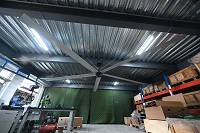
China’s dominance in large fan manufacturing stems from a deeply integrated supply chain that few other countries can match. Raw materials like specialty steels, aluminum alloys, and advanced composites are sourced domestically, reducing lead times and costs. Combined with a dense network of component suppliers—from precision motors to aerodynamic blades—factories can scale production rapidly without relying on volatile international logistics. This vertical integration also allows for iterative design improvements, as feedback from downstream partners flows directly into the production line.
Another factor is the sheer concentration of engineering talent and production expertise in industrial clusters like the Yangtze River Delta. Generations of workers and technicians have refined processes that blend automated precision with hands-on craftsmanship. For instance, balancing massive impellers—a task where even minor errors cause vibration and efficiency loss—is performed with a level of skill that proprietary software alone cannot replicate. This human-machine synergy keeps quality high even as output volumes soar.
Cost efficiency doesn’t come from labor savings alone, but from how systematically Chinese manufacturers optimize energy consumption and material usage. Many plants reuse heat from curing ovens to pre-warm intake air or employ closed-loop water systems that slash waste. By treating byproducts like metal shavings and excess epoxy as valuable resources rather than trash, they turn what would be a disposal cost into a revenue stream. This kind of lean, whole-system thinking makes the price gap with Western counterparts difficult to close.
Custom Fan Configurations for Complex Environments
Not every setup fits the standard template, and that’s where custom fan arrangements come into play. In spaces with irregular airflow, heat pockets, or physical obstructions, off-the-shelf solutions often fall short. Here, the focus shifts to tailoring blade geometry, motor selection, and mounting positions specifically to the environment—whether it’s a cramped machinery room or an outdoor installation battered by wind and dust. It becomes less about following generic guidelines and more about interpreting the unique thermal footprint of the location.
Designing for complex environments means balancing performance with resilience. In a chemical plant, for instance, the choice of coatings and motor sealing isn’t just an afterthought—it’s the difference between continuous operation and frequent shutdowns. Similarly, a coastal installation demands materials that won’t surrender to salt spray within a few seasons. These customized configurations often involve tweaking fan speed controls, wiring for remote monitoring, or even integrating with existing safety protocols to ensure that the cooling system doesn’t just work on paper but holds up under real-world stress.
The real payoff comes when the fans melt into the background of day-to-day operations. In a lab with strictly controlled pressure differentials, a specialized fan array might maintain containment without constant manual adjustments. Logistics centers benefit from strategic placement that accounts for forklift traffic and high shelving, quietly preventing hot zones without disrupting workflows. It’s this level of attention to context that turns a basic cooling component into a reliable piece of infrastructure, often without anyone noticing it’s there.
How Modern Fans Slash Energy Bills Without Sacrificing Power
It’s easy to assume that a powerful fan must come with a hefty electricity bill, but that old rule no longer applies. Today’s ceiling and pedestal fans pack advanced brushless DC motors that sip energy while still pushing massive amounts of air. These motors use permanent magnets and electronic controllers to eliminate the friction and heat waste common in older AC motors. The result is a fan that can run for hours on just a few watts, keeping a room comfortable without the meter spinning out of control.
Beyond the motor itself, aerodynamic blade designs play a huge role in efficiency. Engineers now model fan blades after airplane wings, optimizing the curve and angle to move more air with each rotation. Some modern fans even offer adjustable pitch or dual-layer blades that cut through turbulence, letting you feel a stronger breeze without cranking up the speed. That means you can set the fan on low or medium, enjoy the same cooling effect, and watch the energy use drop even further.
Smart controls add another layer to savings. Built-in sensors adjust the fan’s speed based on room temperature or occupancy, so it never runs harder than necessary. And with scheduling via app or voice commands, it’s effortless to make sure the fan only operates when someone’s actually around to feel it. These features transform the humble fan from a basic on-off appliance into an intelligent cooling partner that respects both your wallet and the planet.
Bringing Intelligence to Industrial Climate Systems
Modern industrial climate systems are moving beyond simple thermostats and timers. By embedding real-time sensors and adaptive controls, facilities can now respond to subtle shifts in temperature, humidity, and air quality without manual intervention. This shift turns a once-static environment into a self-regulating ecosystem that anticipates demand rather than just reacting to it.
What sets intelligent climate management apart is its ability to learn from operational patterns. Machine-driven analysis of energy use, occupancy trends, and equipment performance allows the system to fine-tune settings for both comfort and efficiency. Over time, it spots inefficiencies that human operators might overlook—like a cooling unit working harder than needed during low-activity periods—and adjusts automatically.
The result is a seamless blend of precision and conservation. Industrial spaces maintain strict climate conditions without wasting resources, and maintenance teams gain early warnings about potential failures. This isn't about adding complexity; it's about letting the building itself handle the details so that people can focus on what matters most.
A Greener Way to Keep Big Spaces Cool
Cooling vast warehouses, factories, or event halls has always been an energy-guzzling affair. Traditional HVAC systems work relentlessly to chill every cubic meter of air, often battling against hot machinery or sun-baked rooftops. Yet, a different approach is gaining traction—one that focuses on cooling the people and processes directly rather than the entire volume of space. By combining high-volume, low-speed fans with smart evaporative cooling or geothermal heat exchange, these systems move air precisely where it's needed, slashing energy use without sacrificing comfort.
The secret lies in the thoughtful marriage of physics and design. Instead of pushing conditioned air through miles of ducts, these solutions leverage natural convection and targeted airflow. Massive overhead fans gently recirculate layers of trapped heat, while misting systems or radiant cooling panels absorb excess warmth right at its source. The result is a subtle breeze and a perceptible drop in effective temperature, achieved with a fraction of the electricity. It’s a lesson borrowed from traditional architecture—like windcatchers in ancient desert cities—updated with modern materials and controls.
What seals the deal for many facility managers is the quiet resilience of such systems. They hum along on modest power, often integrating seamlessly with rooftop solar arrays or night-flush cooling cycles. Maintenance is minimal, and the absence of refrigerants dodges the environmental headaches of conventional air conditioning. In an era of rising heat and tightening carbon budgets, keeping big spaces cool no longer requires a cooling tower the size of a house—just a smarter way of moving air.
FAQ
These fans leverage advanced aerodynamic blade designs and high-efficiency motors, delivering massive airflow with minimal energy consumption, a combination that's hard to beat.
By generating a consistent, gentle breeze that counters heat stratification, they keep the entire space uniformly cool, eliminating hot spots and reducing perceived temperature by several degrees.
Absolutely. They consume far less power while enhancing air circulation, often allowing facilities to raise thermostat setpoints or even turn off air conditioning in milder weather, leading to savings of up to 30% on cooling bills.
They're used in factories, logistics centers, gymnasiums, and agricultural barns—any large open space that needs efficient air movement without the expense of ductwork.
The slow-rotating, high-volume approach inherently produces less noise. Plus, precision-balanced blades and brushless DC motors keep operation whisper-quiet, vital for environments where communication matters.
They're built to be nearly maintenance-free. Sealed bearings and durable powder-coat finishes protect against dust and corrosion, so the main task is just occasional blade cleaning and visual inspections.
They've combined heavy R&D investment with scalable production, refining both performance and reliability while keeping costs competitive, which has made their fans popular across global markets.
Conclusion
The efficiency of large industrial fans hinges on advanced aerodynamic principles that optimize blade design for maximum airflow with minimal energy consumption. China's manufacturing sector has refined these designs through precision engineering, leveraging high-performance motors and durable composite materials. The result is a generation of fans that deliver consistent, powerful ventilation in spaces like warehouses and factories. Moreover, manufacturers excel in creating custom configurations—adjustments in blade pitch, diameter, and mounting options ensure these systems integrate seamlessly into complex architectural layouts, from high-ceilinged atriums to tight production floors. This adaptability stems from a deep understanding of fluid dynamics and on-site requirement analysis, making Chinese big fans a go-to solution for diverse industrial environments.
Beyond mere air movement, modern industrial fans incorporate smart technologies that drastically cut energy usage. Variable speed drives allow fans to adjust output based on real-time temperature and occupancy data, slashing electricity bills without compromising performance. Intelligent climate systems, often linked to building management platforms, can predict cooling needs and operate autonomously. This integration not only boosts efficiency but also extends equipment life. From an environmental perspective, reduced energy demand translates into a lower carbon footprint, aligning with global sustainability goals. These innovations demonstrate how China's big industrial fans are not just cooling tools but pivotal components of eco-friendly industrial operations.
Contact Us
Contact Person: Michael Danielsson
Email: [email protected]
Tel/WhatsApp: +1 951 565 7769
Website: https://www.vindusfans.com