

Aluminum Gravity Parts Company: Your Source for Durable and Precision-Cast Components
2026-07-09
When it comes to precision and durability, not all aluminum gravity castings are created equal. At DDR, we have redefined what you can expect from gravity-cast components—merging advanced engineering with rigorous quality control to deliver parts that perform flawlessly in the most demanding applications. In this post, we'll explore the key advantages of aluminum gravity casting and why DDR has become the go-to partner for industries that refuse to compromise on quality.
Crafting Precision Through Gravity Casting
Gravity casting relies on the steady pull of Earth's own force to draw molten metal into a mold, letting it fill every crevice without the turbulence of pressurized systems. This natural flow gives the material time to settle evenly, reducing internal stresses and trapping far fewer air pockets than faster methods. The result is a component whose crystalline structure remains intact, delivering consistent mechanical properties from one pour to the next.
What sets gravity casting apart is the level of control it offers over solidification. By regulating the temperature of the mold and the pouring rate, foundry teams can guide how the metal cools from the outside in, promoting directional solidification that pushes impurities toward the sprue rather than the finished part. That deliberate pace translates into finer surface detail and dimensional stability, often eliminating the need for secondary machining in critical zones.
In practice, this means parts emerge truer to design, with fewer surprises during inspection. Holes align, walls stay on tolerance, and post-processing steps like grinding or reaming become touch-ups instead of major corrections. For industries where reliability under load is non-negotiable, that blend of repeatability and material integrity is the quiet advantage that keeps gravity casting at the heart of precision manufacturing.
Aluminum Parts That Endure: The Science Behind Our Durability
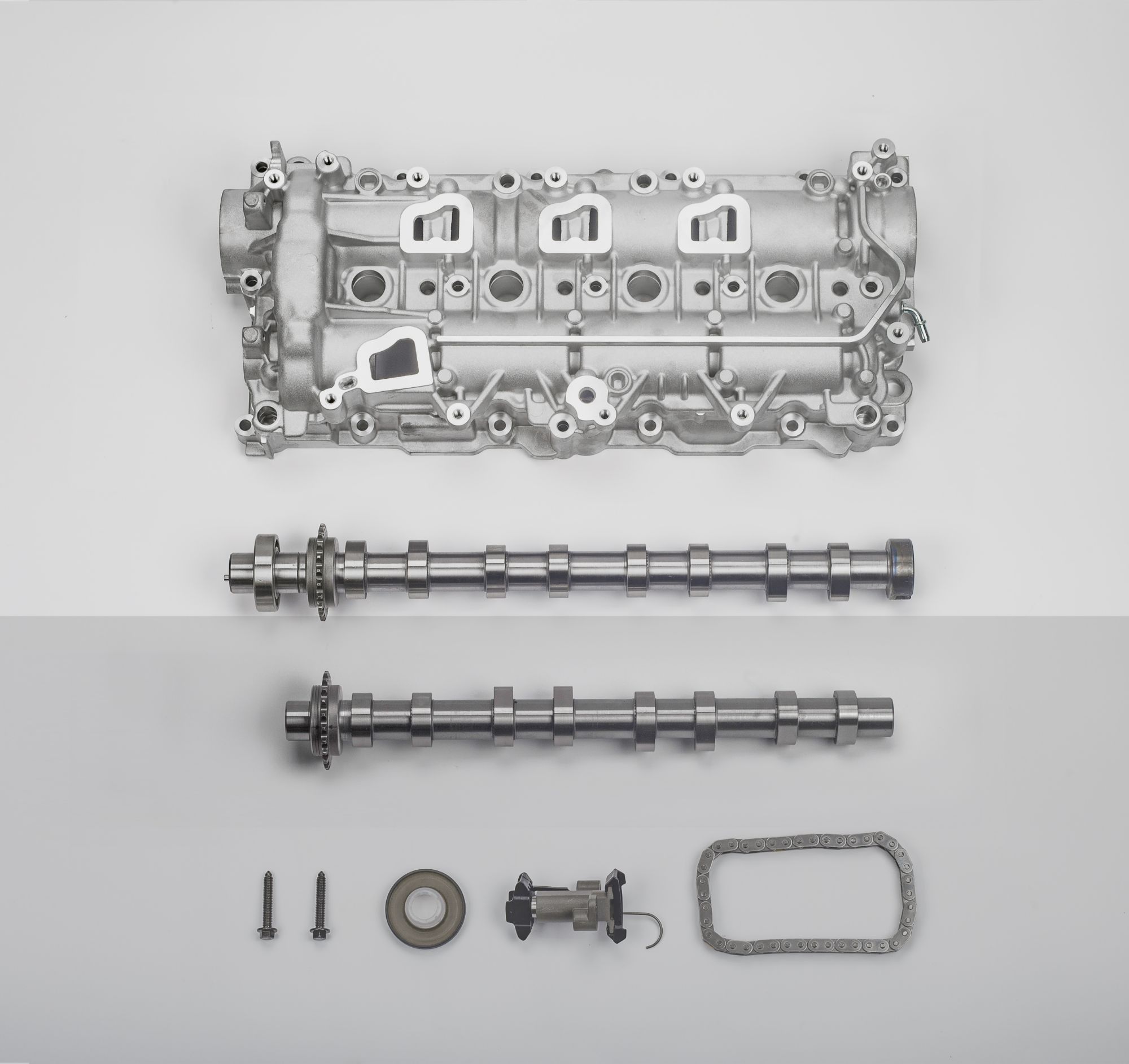
Aluminum's lightweight character often distracts from its impressive strength. Our approach starts with carefully selected alloys, blending magnesium and silicon to form a fine-grained microstructure that resists fatigue. Through controlled heat treatment, we lock in hardness and tensile properties that allow components to endure repeated loading without warping or cracking.
Corrosion threatens metal parts in subtle ways, but our aluminum is built to resist. We employ a precise anodizing process that grows a dense, integral oxide layer directly from the metal surface. This layer acts as a barrier against moisture, salts, and chemicals, preserving the part's integrity over years of exposure. It's not a superficial coating—it's a transformation of the material itself.
Consistency in manufacturing is where science meets longevity. Our production uses high-precision CNC machining and in-process monitoring to eliminate micro-defects that could become failure points. Every component is verified against tight tolerances, ensuring that the final product not only fits perfectly but also performs reliably in demanding applications, cycle after cycle.
Beyond Standard: Custom Solutions for Complex Components
Off-the-shelf components often fall short when geometries become unconventional or performance demands escalate beyond typical thresholds. Complex assemblies require more than just part selection—they demand an acute understanding of how materials behave under stress, how tolerances stack in dynamic environments, and how seemingly minor design tweaks can ripple through an entire system. Our approach starts with a blank page, not a catalog, allowing us to engineer from first principles when standard solutions simply can’t deliver.
True customization thrives on collaboration. We embed our engineering team into your design cycle early, analyzing thermal profiles, vibration signatures, and mechanical loads that most suppliers overlook. The outcome isn’t just a part that fits—it’s a solution tailored to the application’s unique physics, often incorporating novel alloys, surface treatments, or hybrid manufacturing techniques that bridge multiple disciplines. This process transforms constraints into advantages, yielding components that perform precisely where standard options break down.
From Ingot to Final Part: A Journey of Quality
Every great part begins with a single ingot, but not just any ingot. It all starts with raw material that has been meticulously sourced and tested for purity and consistency. Manufacturers understand that quality cannot be added later; it must be embedded from the very first step. That’s why each ingot is subjected to rigorous chemical analysis and structural evaluation before it ever enters the production line. The journey has just begun, but the foundation is everything.
Once the ingot passes inspection, it moves through a series of carefully controlled processes—forging, machining, heat treatment, and more. At each stage, skilled technicians monitor critical parameters, making real-time adjustments to maintain exacting tolerances. Advanced sensors track temperature, pressure, and dimensional accuracy, flagging any deviation before it can become a defect. This isn't just about meeting specifications; it's about ensuring that the part will perform reliably under the most demanding conditions.
The final part isn't truly complete until it undergoes a battery of demanding tests. From ultrasonic inspection to hardness testing, every characteristic is verified against precise benchmarks. Surface finish, fatigue resistance, and structural integrity are all scrutinized without compromise. Only when a part satisfies every requirement does it earn its place in a larger assembly, carrying forward the promise of quality that began with a single ingot.
Engineering Excellence in Every Grain
Precision isn't just a goal—it's embedded in every particle. From raw material selection to final processing, each step is orchestrated with meticulous attention to structural integrity and consistent quality. The result is a material that behaves predictably, performs reliably, and adapts seamlessly to demanding applications.
We don't rely on generic methods. Instead, our approach combines advanced manufacturing techniques with a deep understanding of material science, ensuring that even the smallest grain contributes optimally to the whole. This granular focus eliminates variance, reduces waste, and elevates the end product beyond conventional benchmarks.
What truly sets this apart is the blend of artistry and rigor. There's a rhythm to the process—a deliberate calibration of temperature, pressure, and timing—that turns raw elements into engineered perfection. It's this silent promise of excellence, grain by grain, that builds trust long before any performance test does.
The Smart Choice for High-Performance Aluminum Components
When precision and durability are non-negotiable, high-performance aluminum components offer a blend of strength and lightweight design that few materials can match. Their natural resistance to corrosion and impressive thermal conductivity make them essential across industries from aerospace to automotive engineering.
The versatility of aluminum allows for intricate shapes and tight tolerances through advanced machining and forming processes. This adaptability shortens production cycles and lowers costs without sacrificing quality, giving engineers the freedom to innovate while maintaining strict performance standards.
Opting for these components is more than a material choice—it's a commitment to reliability and efficiency. With consistent mechanical properties and a recyclable nature, they support sustainable manufacturing practices while delivering the strength and precision required for demanding applications.
FAQ
Gravity casting relies on natural gravitational force to fill the mold, which reduces turbulence and porosity. This yields denser, more uniform parts compared to high-pressure methods, making it ideal for structural components that demand consistent material properties.
Absolutely. Each part goes through dimensional inspection, X-ray or dye penetrant testing for subsurface flaws, and mechanical property verification. We also perform pressure testing on components that will hold fluids or gases, ensuring reliability under real operating conditions.
You'll find our parts in automotive powertrain systems, hydraulic control manifolds, heavy truck chassis, electric vehicle housings, and industrial automation equipment. Any application where you need complex shapes with high strength and thermal conductivity is a good fit.
Our parts maintain integrity from -40°F up to 500°F without losing strength. The dense grain structure from gravity casting resists crack propagation, and we can add heat treatments for enhanced fatigue life in vibration-prone assemblies.
We handle full custom jobs starting from your CAD model. After tooling is approved, sampling typically takes 4-6 weeks. We do in-house design feedback to improve castability before any metal is poured, which accelerates the process.
Aluminum gives you about one-third the weight of steel with excellent corrosion resistance and thermal management. You get near-net shape complexity that reduces machining, and overall system weight savings that translate directly to energy efficiency in vehicles or machinery.
Our mold design uses controlled cooling simulation to anticipate shrinkage, and we cast with tolerances as tight as ±0.005 inch per inch. Most critical features need only light finish machining, keeping downstream costs low.
Conclusion
At Aluminum Gravity Parts Company, we transform molten metal into meticulously engineered components through the art and science of gravity casting. Our process, highlighted by "Crafting Precision Through Gravity Casting," hinges on controlled flow and solidification, enabling us to achieve intricate geometries and consistent density that other methods can't match. This foundation of precision is reinforced by an unwavering commitment to durability, as explored in "Aluminum Parts That Endure." We carefully select alloys and refine our heat-treatment protocols to enhance fatigue resistance and corrosion protection, ensuring every part withstands demanding environments.
But our capabilities extend far beyond off-the-shelf solutions. As "Beyond Standard" illustrates, we thrive on complexity, collaborating with clients to deliver custom components that solve unique engineering challenges. The journey from raw ingot to finished product, detailed in "From Ingot to Final Part," is a testament to our rigorous quality checks at every stage—guaranteeing dimensional accuracy and material integrity. "Engineering Excellence in Every Grain" captures our microscopic focus on microstructure control, which directly translates to superior mechanical properties. Ultimately, choosing us is "The Smart Choice for High-Performance Aluminum Components" because we combine deep metallurgical insight with a problem-solving mindset, delivering parts that don't just meet specifications but redefine what's possible in lightweight, durable design.
Contact Us
Contact Person: Shelly
Email: [email protected]
Tel/WhatsApp: 8613967667688
Website: https://www.yongyu.com/